On Time, Every Time.
Cook On-Site, Transport Hot, or Reheat? BBQ Catering’s Three Modes
Every catering job answers one logistics question before any other: where does the cooking happen? There are three honest answers, each with its own quality profile, labor bill, permit posture, and food-safety rules – plus the hybrid that most professionals actually run.
Mode 1: Cook ahead, transport hot (the workhorse)
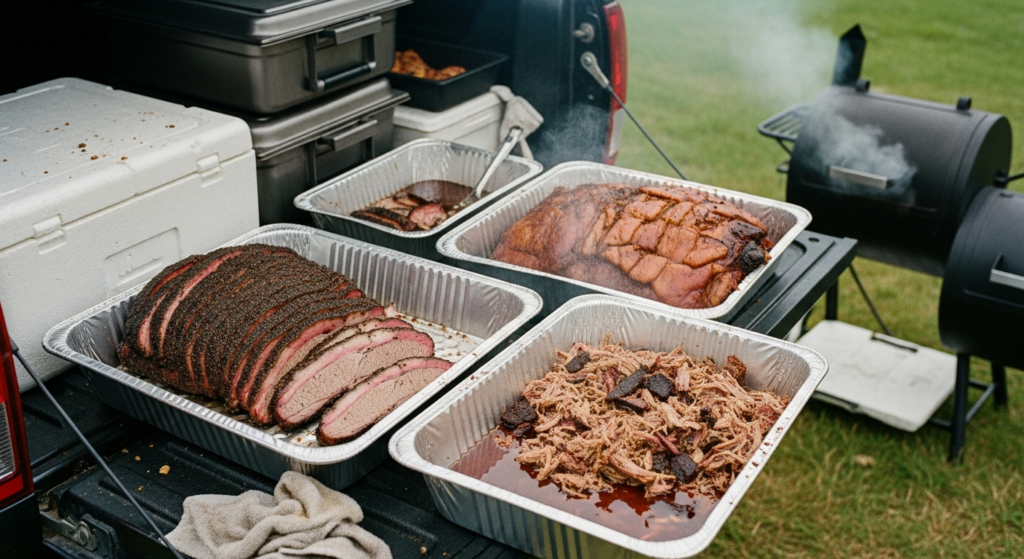
Smoke at home base, wrap, hold above 140°F in insulated carriers, drive, serve. This is how the overwhelming majority of BBQ catering works, because big cuts genuinely improve in a 2 to 6 hour hold and a fixed serve time becomes hittable.
- Quality: excellent for brisket, butts, sausage; hard on wing skin and rib bark past ~90 minutes.
- Labor: the cook happens on your schedule; on-site needs are setup and service only.
- Safety rule: above 140°F from pit to plate; probe at arrival. The drive rides inside the hold.
- Watch: the hold windows per cut – the calculator warns when a drive outruns a meat’s window.
Mode 2: Cook on-site (the show, and the exception)
Tow the rig, cook at the venue. Reserved in practice for small events, steak-and-burger menus (which do not hold at all), and whole-hog roasts where the pit is the party.
- Quality: unbeatable for hold-hostile foods; risky for 12-hour cuts against a fixed serve time.
- Labor: the whole cook happens on the clock, on location – the most expensive mode by hours.
- Logistics: venue approval for open fire, space, and smoke; some jurisdictions treat on-site cooking under different (sometimes easier) rules than transported food – ask.
Mode 3: Cook ahead, chill, reheat (the drop-off economist)
Cook a day or more ahead, chill fast, refrigerate, reheat to 165°F internal before or at service. The standard for budget corporate drop-offs and dishes that reheat gracefully (pulled pork in sauce shines).
- Quality: good for pulled and sauced meats; sliced brisket suffers; never for steaks.
- Safety rules change: the danger is the chill – get from 135°F to 41°F within roughly 6 hours (health codes vary), shallow pans uncovered in the walk-in, then the hard 165°F reheat.
- Economics: decouples the cook from the event entirely – one big cook day can feed three drop-offs.
The hybrid the pros run (and the show smoke)
Mains transported hot + delicate items finished on a small pit at the venue: wings crisped, ribs glaze-set, apps rolling – and yes, presence smoke. Bringing the rig and keeping a light smoke going while pre-cooked mains hold is standard practice and honest showmanship: the smell IS part of what clients book. It costs a few tending hours and some fuel; the calculator’s “bring the rig” toggle prices both.
Choosing in ten seconds
- Menu holds well + fixed serve time -> transport hot.
- Steaks, burgers, or the pig IS the event -> cook on-site.
- Drop-off, budget, or multi-event cook days -> chill and reheat.
- Wedding-grade polish -> hybrid with presence smoke.
Frequently asked questions
Do BBQ caterers cook on-site or bring the food?
Mostly they bring it: meats are smoked at home base, held above 140°F in insulated carriers, and transported - big cuts improve in the hold. On-site cooking is reserved for steaks and burgers, whole hogs, and finishing delicate items; many pros run a hybrid with a small pit at the venue for presence smoke.
Is it safe to transport smoked meat to an event?
Yes, with one rule: keep it at or above 140°F from pit to plate. Wrapped meat in a preheated, towel-packed cambro or cooler holds above the line for 4 to 6 hours - probe at arrival to verify.
Can you smoke meat a day ahead and reheat it for catering?
Yes - chill it fast (135°F to 41°F within about 6 hours, shallow pans), refrigerate, then reheat to 165°F internal before serving. Pulled and sauced meats handle it best; sliced brisket and anything with crisp skin suffer.
Why do caterers bring a smoker if the food is already cooked?
Presence smoke: a light fire at the venue finishes delicate items (wings, glazes), keeps the line warm, and delivers the smell and show clients are paying for. It is standard practice, priced as a few tending hours plus fuel.
Written by John Kirker, who built the first meat smoking calculator in 2011. Times come from cooks we have actually run and logged; temperature and feel decide the finish, never the clock alone.
Reviewed by John Kirker, Founder, John Kirker Inc. - last updated July 30, 2026.

Rated 5by 500+ users
Tagline
Other Options
The MeatSmokingCalculator will help you plan the timeline for any meal.
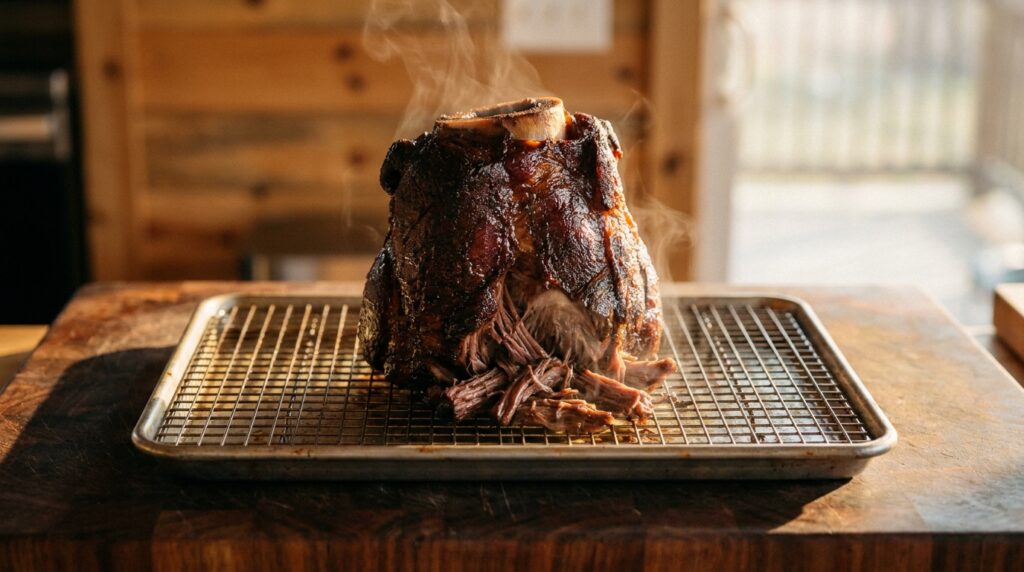
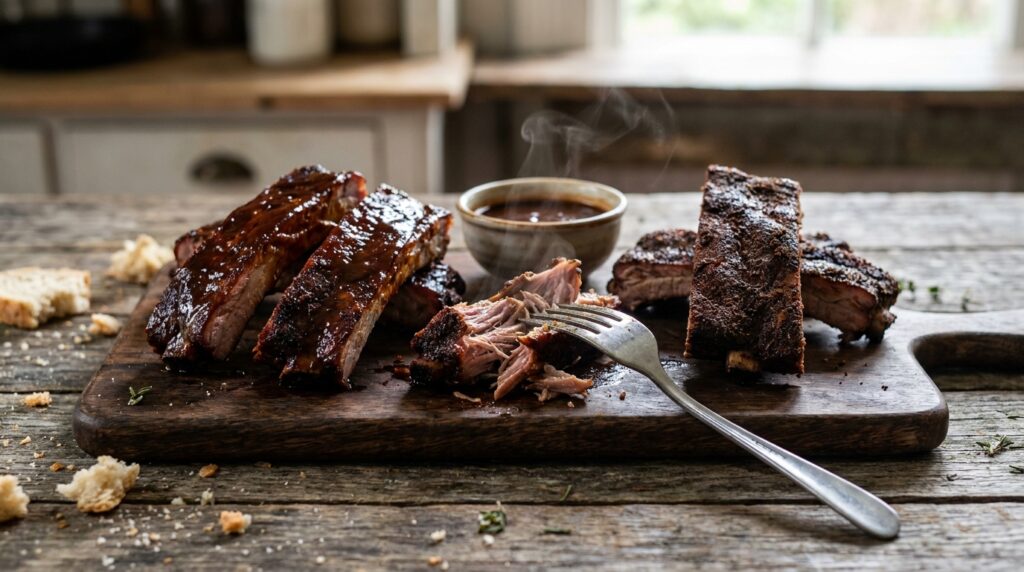
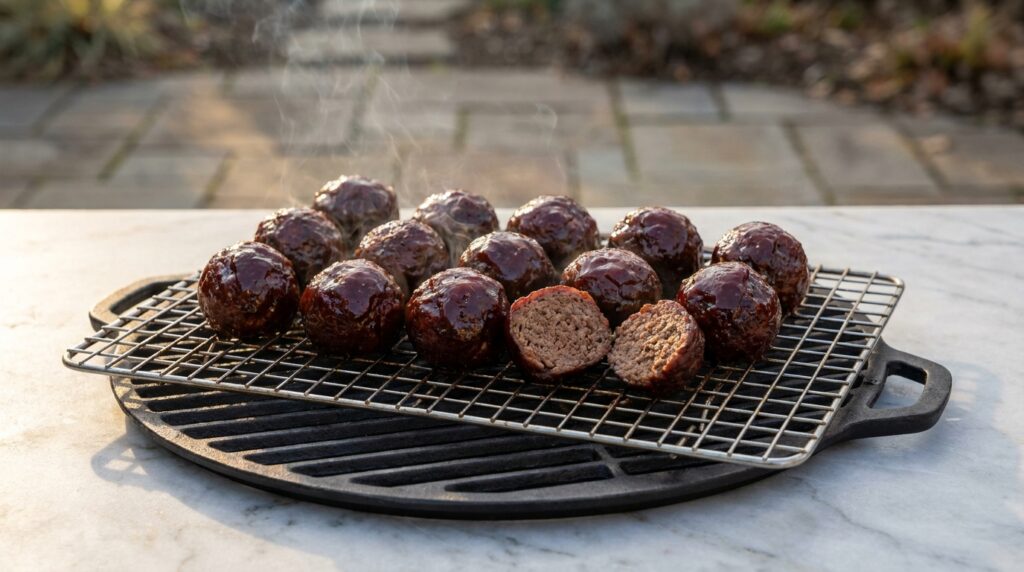
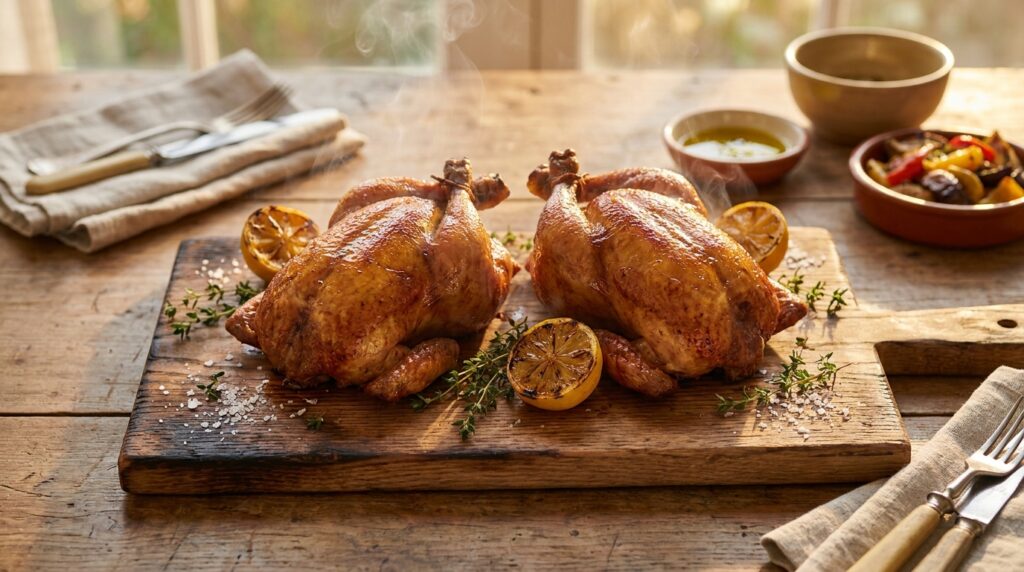
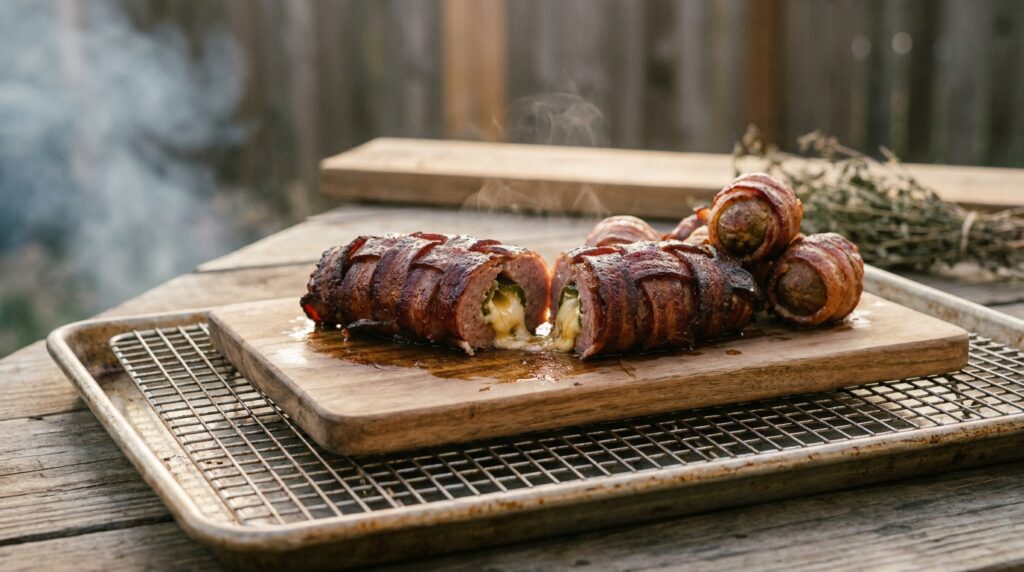
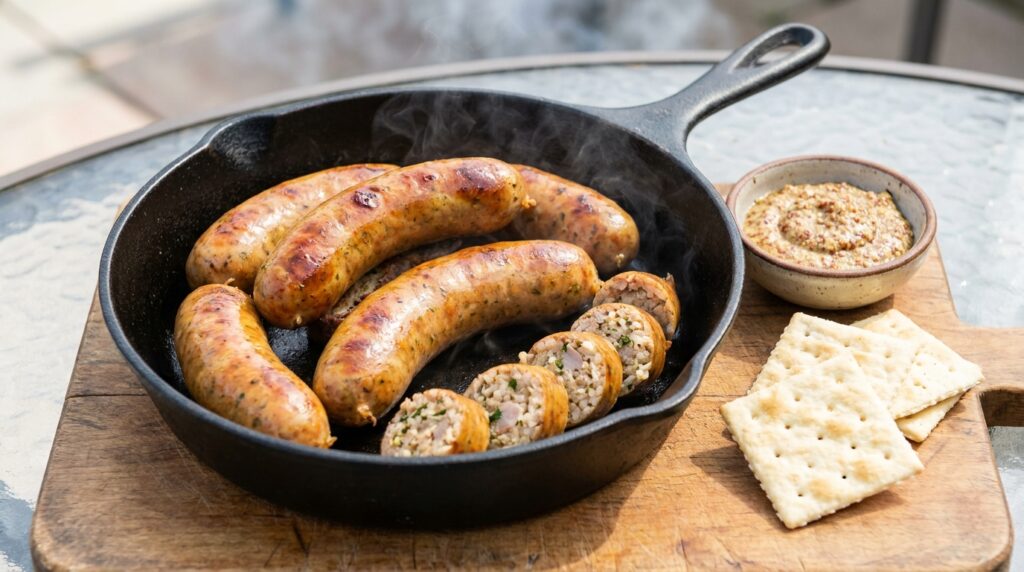
Planning, ingredients, preparation, and timing are the most critical elements to making and serving great food.
Having enough time is the most important part when it comes to slow and low!
Meat Smoking Calculator takes the thinking out of the process.
It makes cooking and serving amazing tasting smoked meats every time, on time.
SOME OF OUR FAVORITE SITES
Smoking a Turkey for Thanksgiving!
BBQ Brethren
Smoking Meat Forums
Deejay’s Smoke Pit
USDA’s Food Safety Guidelines
Smoking Pit
Virtual Weber Bullet
Smoking Times and Temps
* To help support this free site, posts contain affiliate links. If you use one of the affiliate links, we may earn a commission at no additional cost to you. As an Amazon Associate I earn from qualifying purchases.