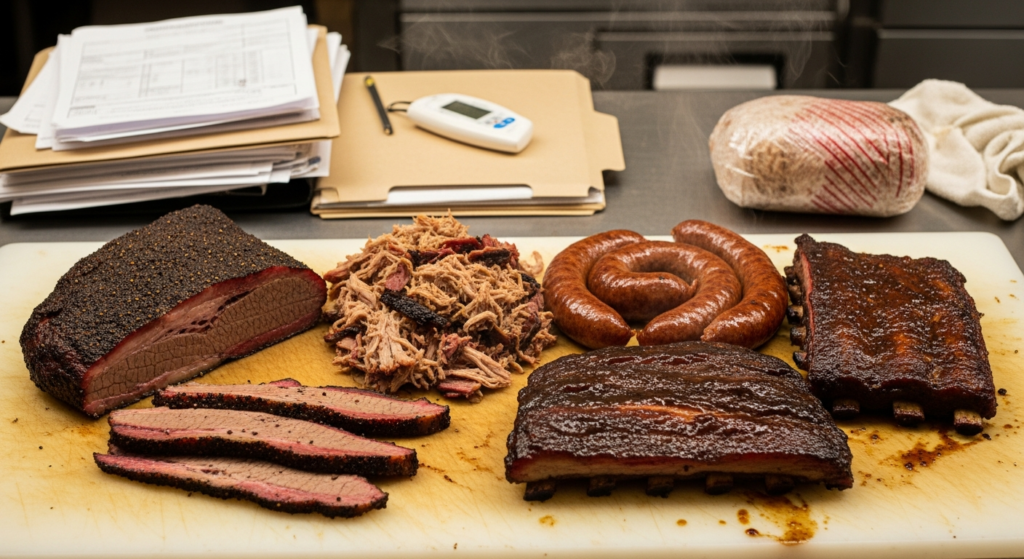
On Time, Every Time.
BBQ Catering Licenses, Permits & Insurance: What You Actually Need
Most BBQ caterers need five things: a business entity and local business license ($100 to $400 to start), a health department catering permit ($100 to $800 per year), access to a licensed kitchen where prep is required ($0 to $800 per month), general liability insurance ($600 to $1,200 per year), and a temporary food establishment permit for public events ($50 to $75 per event). All-in, a legitimate side operation carries roughly $1,000 to $2,500 per year of overhead. Nobody starts smoking brisket because they love regulatory paperwork. But that stack is smaller and cheaper than most pitmasters fear – and the alternative (an uninsured incident, a health inspector at a public event) can end the business in an afternoon. Here is the whole thing with real cost ranges, laid out as the calendar you actually have to work. Rules vary by state and county; treat this as the map, and your local health department as the territory.
How much general liability insurance costs for most caterers
Treat $600 to $1,200 per year as the working range for a small BBQ catering operation. That is the same band our startup cost breakdown uses.
The wider quotes you will see reported elsewhere sit just outside that band on both ends: roughly $500 per year for a one-person side operation, up to $1,700 or more once you have employees. If a quote lands far below $500, read the exclusions before you celebrate.
The certificate of insurance is a routine request, not an emergency. Venues and event organizers will require one naming them as additional insured, and your insurer issues those free, so build the request into your booking checklist.
Staffing up adds a second policy. Workers’ comp becomes its own line on top of the general liability premium, which is why it gets its own section below.
What it means per job
We are not publishing invented receipts, and we do not have a verified fee schedule from Travis County, Wake County, or Sedgwick County in hand to quote line by line with a link and a retrieval date. Publishing a named county’s fee without the source document in front of us would be the same invention we are trying to avoid, so the named-county example stays out until we can pull those schedules directly.
What we can stand behind are the ranges the rest of this page uses: a health department catering permit at $100 to $800 per year, a business license at roughly $50 to $150 per year, general liability at $600 to $1,200 per year, and commissary time at $15 to $50 per hour or $300 to $800 per month where it is required. All-in, a legitimate side operation carries roughly $1,000 to $2,500 per year of overhead.
The math that matters is per job, and you can run it on your own numbers today. Take the low end of the stack, roughly $1,000 per year of overhead: across 12 bookings that is about $83 per job, across 24 it is about $42. Take the high end, roughly $2,500 per year: across 12 bookings that is about $208 per job, across 24 about $104. Add $50 to $75 for any booking that is a public event needing its own temporary food establishment permit, since that one is charged per day rather than spread. Divide your own annual total by the number of jobs you actually book and you have the compliance line that belongs in every quote, which is why the catering calculator has an overhead field. Spread it honestly and it is invisible; ignore it and it eats your margin from the shadows.
Three documents turn these ranges into your numbers: your county’s published fee schedule, your commissary’s rate card, and your own insurance binder. Pull all three, note the date you pulled them, and rerun the per-job division above with your real annual total.
The food-safety throughline
Every permit above exists to enforce one thing: time and temperature. Hold hot food above 140°F, chill fast if you cook ahead, reheat to 165°F, and document your process. Our holding and transport guide covers the practice; the inspector covers the paperwork.
Questions about licensing from home, private jobs, and insurance are answered together in the frequently asked questions at the end of this page.
The order to do it in, and how early to start
The five pieces are not five parallel errands. Two of them gate the others, and one of them is the reason people miss their first booked event.
Here is the stack as a calendar, so you can see what has to start when. Work the list top to bottom and start the day you decide you are doing this for money.
- Week 1 – LLC filing and business entity ($100 to $400 to start). An LLC is the standard move, cheap liability separation between the business and your house, and most states process one online in a few business days. Nothing else on this list can be issued to a business that does not exist yet, so file first.
- Weeks 1 to 3 – city or county business license (1 to 2 weeks). Apply as soon as the entity number lands. Typically $50 to $150 per year, and the health department will usually ask for it.
- Weeks 2 to 8 – health department catering permit and plan review (4 to 8 weeks). This is the long pole and the most local step, at $100 to $800 per year, and fees scale with sales volume in some counties. Find your agency in the FDA’s state and territorial food safety directory, then call the county or city office it points you to before you apply, so you know what they want to see, especially where food is prepped – home kitchens generally do not qualify for ongoing commercial catering. Inspectors are far friendlier as advisors than as enforcers.
- Same window – lock in kitchen access ($0 to $800 per month). Plan review asks where you prep, so have your answer ready: an off-hours church or restaurant kitchen (sometimes free or trade), hourly commissary time at $15 to $50, or a monthly plan at $300 to $800. Many BBQ caterers cook on their own permitted rig and use the commissary only for sides.
- Before your first booking – general liability insurance ($600 to $1,200 per year). Bind coverage before you take deposits, and see the insurance section above for the exclusions worth reading. The certificate of insurance naming a venue as additional insured is a same-day request in most cases, and your insurer issues it free, so make it a line on your booking checklist rather than a panic call the week of the event.
- Per event – temporary food establishment permit (submit 2 to 4 weeks ahead). Festivals, markets, and ticketed gatherings commonly run $50 to $75 for a single day. Deadlines are set by the jurisdiction and by the event organizer, so ask for the cutoff the moment you accept the date. Private parties on private property generally do not need one.
Realistically, from cold start to legally serving a public event, plan on two to three months, driven almost entirely by the health department step. Do not advertise a public event you are not permitted for – see how to book catering clients for the marketing you can run legally while the paperwork clears, and the first paid backyard party guide if you are still in one-off favor territory.
What to ask on the health department call
“Call your county” is only useful once you know which office to call and what to ask. Look your state up in the FDA’s directory of state and territorial retail food safety agencies to identify the agency that writes your code, then follow it to the county or city environmental health office that issues the permit.
Run the whole checklist on one call. The permit itself runs $100 to $800 per year and the rules are the most local part of the whole stack, so treat the call as a fact-finding mission and write the answers down. Read these questions more or less verbatim.
- “Does a permitted mobile smoker satisfy your cooking-facility requirement?” This is the question that decides your commissary budget, and the answer is the difference between $0 and $800 per month.
- “Is plan review required for catering-only, with no storefront?” Plan review is the long pole in the schedule. If it applies to you, expect the health department step to take weeks rather than days.
- “What is your commissary agreement form, and what do you need on it?” They will ask where food is prepped, and home kitchens generally do not qualify for ongoing commercial catering. Get the exact form before you negotiate off-hours time with a church or restaurant kitchen.
- “Do you license by sales volume, and what are the tiers?” The tier you start in may not be the tier you finish the year in.
- “What is your temporary event permit cutoff?” Public events commonly need a temporary food establishment permit at $50 to $75 per day, and you want the submission deadline in hand before you accept a festival date.
- “Who inspects, and can I get a pre-application walkthrough of my setup?” A ten-minute look at your rig before you file beats a failed inspection after.
Ask all of it in one call, ideally before your first public-facing job. The answers to questions one and three are what let you finalize the kitchen access line in your startup budget, and the answer to question five is what keeps a booked event from slipping away on a paperwork deadline.
What goes wrong, and what it costs
The stack itself is manageable. The failures are almost always scheduling failures, not money failures, and they cluster in three places.
- The missed temporary permit deadline. A caterer accepts a festival date, assumes the organizer handles the paperwork, and finds out ten days out that the county cutoff was two to four weeks ahead. The permit itself is only $50 to $75 for the day, so the loss is not the fee, it is the event: deposits refunded, meat already bought, and a market organizer who books someone else next year. The fix is boring and total, ask for the cutoff the moment you accept the date and put it on the calendar next to the event itself, not in your inbox.
- The plan review kickback. The health department sends the application back because the commissary agreement is missing or on the wrong form, and the catering permit step, already the 4 to 8 week long pole, restarts. Nothing is billed for the kickback, but a month of delay against $300 to $800 per month of commissary you may already be paying for is real money out. The fix is to get their exact commissary agreement form before you file, and to ask up front whether plan review even applies to catering-only with no storefront.
- The COI that took a week. A venue asks for a certificate of insurance naming them as additional insured, and the request goes out the week of the event. Insurers issue those free and usually same day, but if you have not bound your general liability yet, that $600 to $1,200 per year policy has to be underwritten first, and a same-day favor becomes a week of scrambling with the venue threatening to pull the date. The fix is to bind coverage before you take deposits and to make the COI request a standing line on your booking checklist.
All three are cured by the same habit: work the sequence early rather than in parallel with a booked date. Two to three months from cold start to legally serving a public event is the realistic timeline, and every one of these failures is what happens when someone tries to compress it.
Find your state
The five-piece stack above is the map. Your state health department writes the territory, and the naming, the fees, and the subparts change the moment you cross a line on the ground.
What follows is not a substitute for the call to your county. It is the layer above it, so you know which agency owns the rule and roughly what it is called before you dial. In most states the state agency writes the code while a county or city environmental health office actually issues your permit and shows up to inspect.
Search your state’s food service establishment or catering permit page and you will land on the right agency. New York shows the structure you are looking for: retail food service is governed by Part 14 of the State Sanitary Code, with Subpart 14-1 covering fixed food service establishments, Subpart 14-2 covering temporary food service at fairs and festivals, and Subpart 14-4 covering mobile food service units.
Hunt for that same three-part structure in your own state, because almost every code has it under some name:
There is no state-by-state list below, on purpose. We could name twenty agencies, but without a direct link to each state’s permit page and the specific rule citation next to it – the way Part 14 is cited above – the list is a memory aid at best, and the fees that actually matter are set county by county in most states anyway.
The ranges we can stand behind are the ones this page has used throughout: a health department catering permit at $100 to $800 per year and a temporary food establishment permit at $50 to $75 per day. Get your own two numbers from the county.
Use the FDA’s state and territorial food safety directory to land on your state’s own permit page, then ask the county office it points you to. That directory is the one link that stays current for every state, which is why it does the work a hand-built list would only approximate.
- The fixed rule. The baseline food service establishment code, the one your annual catering permit is issued under at $100 to $800 per year. In New York this is Subpart 14-1.
- The temporary-event rule. The festival, fair, and market booth rule behind the temporary food establishment permit, commonly $50 to $75 per day and submitted 2 to 4 weeks ahead. In New York this is Subpart 14-2.
- The mobile rule. The one that decides whether a smoker on a trailer is a permitted cooking facility on its own or whether you are buying commissary time at $15 to $50 per hour. In New York this is Subpart 14-4.
A smoker on a trailer usually falls under the mobile rule, the festival booth under the temporary one, and your catering business under the fixed one. The state page tells you which is which; the county tells you the fee and the calendar. The health department catering permit is still the 4 to 8 week long pole in your schedule at $100 to $800 per year.
The public-event piece is a separate application whatever the state calls it: a temporary food establishment permit, commonly $50 to $75 per day, submitted 2 to 4 weeks ahead.
Find your state’s page, then take the startup cost breakdown and the six questions above into one call with your county.
Workers’ compensation (the line that starts with your first employee)
General liability covers a guest who gets hurt at your event. It does not cover the person you paid to run the warmers. Workers’ compensation is a separate policy, and for most BBQ caterers it sits dormant right up until the day the operation stops being one person and a rig.
When it triggers
- Your first employee. In most states, hiring anyone on payroll turns coverage from optional to mandatory. The threshold is set state by state, so confirm yours with your state’s workers’ compensation board rather than assuming a one-person hire is too small to count.
- Day-labor event help, in some states. The friend you hand $150 in cash to for a Saturday serving line can still be treated as an employee under state law, regardless of what you both call it. Some states make no exception for casual or one-day help, which is exactly the situation most caterers assume is invisible.
- Anyone you classify as a contractor but direct like staff. If you set the hours, the uniform, and the tasks, a state auditor may reclassify the arrangement, and the policy you skipped becomes a back premium.
What it costs
Workers’ comp is quoted separately and priced on payroll rather than revenue, so a one-Saturday-a-month crew costs meaningfully less than a full-time kitchen. Expect it to sit on top of the $600 to $1,200 per year you already pay for general liability, not inside it.
Staffing up moves both lines at once. The wider insurance quotes for caterers with employees run to $1,700 per year or more, versus roughly $500 for a one-person side operation. Ask your general liability carrier to quote both together, since bundling is usually simpler than sourcing a second insurer mid-season.
Why the health department cares
In some jurisdictions workers’ compensation is a permitting question, not just an insurance question. The health department will not issue or renew a food service permit without proof of coverage, and in states with statutory disability and paid family leave programs, proof of compliance with those can be part of the same submission.
That puts workers’ comp on the critical path of the 4 to 8 week health department step rather than somewhere off to the side. Add it to your booking and paperwork checklist, and ask about it on the same call where you ask about plan review and commissary forms.
Finding out late costs what the plan review kickback costs: a restarted application against commissary you may already be paying $300 to $800 a month for.
Private parties on private property: what changes and what does not
The most common first paying job is a graduation party, a wedding reception, or a company picnic in somebody’s backyard. It is also the job people most often assume is unregulated, and that is only half true. Here is the plain version of what applies.
When the temporary permit does not apply
A private party on private property generally does not need a temporary food establishment permit. That per-event permit, commonly $50 to $75 for a single day and submitted 2 to 4 weeks ahead, exists for festivals, markets, and ticketed gatherings, the events the public can walk up to.
A closed guest list on a host’s own property is a different animal. Confirm it on your health department call anyway, because the definition of a public event is written locally and the answer costs you nothing to get in writing.
The client’s home kitchen is not your kitchen
The exemption on the event permit does not extend to where you prep. Home kitchens generally do not qualify for ongoing commercial catering, and that includes the client’s. Plan review asks where food is prepped, and a homeowner’s stove is not an answer that survives the question.
Cook on your own permitted rig, prep sides at your commissary at $15 to $50 per hour or $300 to $800 monthly, or use off-hours church or restaurant kitchen time. Treat the host’s kitchen as a place to set down pans, not a place to produce food.
You still need the catering permit and the coverage
The catering permit licenses your business, not a specific event. At $100 to $800 per year, it applies the moment you are catering for money, regardless of who owns the lawn.
General liability at $600 to $1,200 per year is the same story, and the private setting is exactly where an uninsured incident hurts most, because there is no venue policy sitting behind you. Bind coverage before you take deposits.
Rented venues add one more step. If the party is at a hall, a country club, or an HOA clubhouse rather than the client’s own home, the venue will likely ask for a certificate of insurance naming it as additional insured, which your insurer issues free and usually same day.
What changes when money or ticketing enters
Two lines move you out of favor territory. The first is getting paid: once you are charging, you are a business, which means the LLC, the local business license, the catering permit, and the insurance, and it means the per-job compliance overhead belongs in your quote.
The second is selling access. Tickets, an open invitation, a public market stall, or anything the general public can buy into makes it a public event, and the temporary food establishment permit comes back with its own submission cutoff set by the jurisdiction and the organizer. Ask for that cutoff the moment you accept the date.
Two guides cover the transition. If you are still doing one-off favors and deciding whether to charge, the first paid backyard party guide walks through it, and the catering contract clauses are what you send once money is involved.
Frequently asked questions
Do I need a license to sell BBQ from home?
Yes. Selling BBQ for money means a business entity and local business license ($100 to $400 to start, roughly $50 to $150 per year for the license) plus a health department catering permit at $100 to $800 per year. Home kitchens generally do not qualify for ongoing commercial catering, so expect a licensed kitchen requirement too.
Can I cater BBQ out of my home kitchen?
Generally no. Home kitchens do not qualify for ongoing commercial catering in most jurisdictions, and plan review will ask where food is prepped. Most BBQ caterers cook on their own permitted rig and prep sides at a commissary at $15 to $50 per hour or $300 to $800 monthly, or use off-hours church or restaurant kitchen time.
How much does a catering permit cost?
A health department catering permit runs $100 to $800 per year, and fees scale with sales volume in some counties. Public events add a separate temporary food establishment permit, commonly $50 to $75 per day. All-in, a legitimate side operation carries roughly $1,000 to $2,500 per year of compliance overhead.
Do I need insurance for a private BBQ catering job?
Yes. General liability at $600 to $1,200 per year applies the moment you cater for money, and a private backyard is exactly where an uninsured incident hurts most, because no venue policy sits behind you. Bind coverage before you take deposits, since underwriting turns a same-day certificate request into a week of scrambling.
How long does a health department catering permit take?
Plan on 4 to 8 weeks including plan review, which makes it the long pole in the whole stack. From cold start to legally serving a public event, realistically two to three months. Get the county’s exact commissary agreement form before you file, because a kickback restarts the clock on that 4 to 8 week step.
Do I need a temporary food permit for a private party?
Generally no. Private parties on private property usually do not need one; the $50 to $75 per day temporary food establishment permit covers festivals, markets, and ticketed gatherings the public can walk up to. Confirm it on your health department call, since the definition of a public event is written locally.
State agency table: who issues the permit, and where the fees come from
Same twenty states as the list above, in table form. The agency column is what to search for; the fee columns are the ranges this page uses, because the actual dollar figure is set by the county or city office that issues your permit, not by the state.
| State | Agency to search for its food establishment permit page | Catering permit fee | Temporary event fee |
|---|---|---|---|
| Texas | Department of State Health Services, retail food operations; permitting handled locally in most large counties | County-set, typically $100 to $800/yr | County-set, commonly $50 to $75/day |
| North Carolina | Department of Health and Human Services, environmental health food protection, county inspections | County-set, typically $100 to $800/yr | County-set, commonly $50 to $75/day |
| South Carolina | Department of Agriculture, retail food safety (permits moved from DHEC to SCDA in July 2024) | County-set, typically $100 to $800/yr | County-set, commonly $50 to $75/day |
| Tennessee | Department of Health, food service establishment permits | County-set, typically $100 to $800/yr | County-set, commonly $50 to $75/day |
| Georgia | Department of Public Health, food service program; permits issued by county boards of health | County-set, typically $100 to $800/yr | County-set, commonly $50 to $75/day |
| Missouri | Department of Health and Senior Services, food establishment and temporary event permits | County-set, typically $100 to $800/yr | County-set, commonly $50 to $75/day |
| Kansas | Department of Agriculture, food safety and lodging program | County-set, typically $100 to $800/yr | County-set, commonly $50 to $75/day |
| Oklahoma | State Department of Health, consumer protection and food service licensing | County-set, typically $100 to $800/yr | County-set, commonly $50 to $75/day |
| Alabama | Department of Public Health, food establishment permits through county health departments | County-set, typically $100 to $800/yr | County-set, commonly $50 to $75/day |
| Kentucky | Cabinet for Health and Family Services, food safety branch, local health department permits | County-set, typically $100 to $800/yr | County-set, commonly $50 to $75/day |
| Arkansas | Department of Health, environmental health protection, food service licensing | County-set, typically $100 to $800/yr | County-set, commonly $50 to $75/day |
| Mississippi | State Department of Health, food protection | County-set, typically $100 to $800/yr | County-set, commonly $50 to $75/day |
| Virginia | Department of Health, food establishment permits through local health districts | County-set, typically $100 to $800/yr | County-set, commonly $50 to $75/day |
| Florida | Department of Business and Professional Regulation for most food service, Department of Agriculture for some categories; confirm which covers catering | County-set, typically $100 to $800/yr | County-set, commonly $50 to $75/day |
| California | California Retail Food Code, administered by county environmental health departments | County-set, typically $100 to $800/yr | County-set, commonly $50 to $75/day |
| Illinois | Department of Public Health, food program, local health department permits | County-set, typically $100 to $800/yr | County-set, commonly $50 to $75/day |
| Ohio | Department of Health, food safety program; licenses issued by local health districts | County-set, typically $100 to $800/yr | County-set, commonly $50 to $75/day |
| Pennsylvania | Department of Agriculture, food safety, with several counties and cities licensing on their own | County-set, typically $100 to $800/yr | County-set, commonly $50 to $75/day |
| New York | Department of Health, Part 14 of the State Sanitary Code (14-1 fixed, 14-2 temporary, 14-4 mobile) | County-set, typically $100 to $800/yr | County-set, commonly $50 to $75/day |
| Michigan | Department of Agriculture and Rural Development, food service licensing, with county inspection | County-set, typically $100 to $800/yr | County-set, commonly $50 to $75/day |
Two notes before you budget from this table. Fees scale with sales volume in some counties, so ask which tier you land in and what the next one is. And the temporary permit’s real cost is never the $50 to $75, it is the submission cutoff of 2 to 4 weeks that you missed, so ask for that cutoff the moment you accept a public date.
Do I need a license to sell BBQ from home?
Yes. Selling BBQ for money makes you a business, and the stack that comes with it is the same one this page has walked through: a business entity and local business license at $100 to $400 to start, a health department catering permit at $100 to $800 per year, general liability at $600 to $1,200 per year, and a temporary food establishment permit at $50 to $75 per event for anything the public can walk up to. The piece that trips people is the kitchen. Home kitchens generally do not qualify for ongoing commercial catering, so plan on cooking from your own permitted rig and prepping sides at a commissary at $15 to $50 per hour or $300 to $800 per month, or on off-hours church or restaurant kitchen time. Confirm the cooking-facility rule with your county, because whether a permitted mobile smoker satisfies it is the single answer that decides whether that line costs you $0 or $800 a month.
The one-page checklist to take to your health department call
Print this, put it next to the phone, and fill in the blanks while you are on the line. Every number in it is a range from this page, and the point of the call is to replace each range with your county’s actual figure. One call, one page, and the kitchen access line in your budget stops being a guess.
Before you dial
- Look your state up in the FDA’s directory of state and territorial retail food safety agencies and follow it to the county or city environmental health office that issues the permit.
- Have your LLC or entity number ready, or know your filing date. Nothing on this list can be issued to a business that does not exist yet.
- Know roughly how you intend to cook: own permitted rig, commissary, off-hours kitchen, or some mix.
The six questions, with a blank next to each
- Does a permitted mobile smoker satisfy your cooking-facility requirement? Answer: ______. This is the $0 versus $800 per month question.
- Is plan review required for catering-only, with no storefront? Answer: ______. If yes, budget the 4 to 8 week long pole.
- What is your commissary agreement form, and what do you need on it? Form name: ______. Get it before you negotiate off-hours time.
- Do you license by sales volume, and what are the tiers? My tier and fee: ______ (the permit runs $100 to $800 per year).
- What is your temporary event permit cutoff? Days ahead: ______ (submissions commonly run 2 to 4 weeks ahead at $50 to $75 per day).
- Who inspects, and can I get a pre-application walkthrough of my setup? Name and number: ______.
The five costs to write down while you have them on the phone
- Business license: $______ per year (typically $50 to $150).
- Health department catering permit: $______ per year (range $100 to $800).
- Kitchen access: $______ per month or $______ per hour (range $0 to $800 per month, $15 to $50 per hour).
- General liability: $______ per year (range $600 to $1,200; bind before you take deposits).
- Temporary permit: $______ per event (range $50 to $75).
Three things to do the day you hang up
- Put the temporary event cutoff on the calendar next to the event itself, not in your inbox.
- Request the commissary agreement form and start the plan review paperwork, since that step drives the two to three month timeline from cold start to legally serving a public event.
- Total the five lines above, divide by the jobs you expect to book, and drop the result into the overhead field of the catering calculator so the compliance cost lands in every quote. If workers’ comp is a permitting requirement in your county, ask about it on the same call, and take the startup cost breakdown with you for the rest of the budget.
The booking checklist: every compliance step as a dated line item
Every failure on this page is a calendar failure, so here is the artifact that fixes it. Copy this into whatever you already use for bookings and fill in the two date columns the moment a client says yes. Day 0 is the day you accept the date; the deadlines below count backward from event day.
- Before any of it – bind general liability (done once, before your first deposit). The $600 to $1,200 per year policy has to be underwritten before a certificate of insurance can be issued, so this is not a per-booking task, it is a prerequisite. Line item: GL policy bound, effective date ____, carrier ____, policy number ____. If this line is blank, do not take a deposit.
- Day 0 – ask the organizer or venue for the temporary permit cutoff. Public events commonly need a temporary food establishment permit at $50 to $75 per day, and deadlines are set by the jurisdiction and by the event organizer. Line item: county cutoff date ____, organizer cutoff date ____, both written on the calendar next to the event itself, not left in your inbox.
- Day 0 – confirm public or private. Private parties on private property generally do not need the temporary permit; tickets, an open invitation, or a public market stall mean it applies. Line item: public event yes / no, confirmed with ____ on ____.
- Day 0 to 1 – take the deposit, not before. Deposits come after coverage is bound, since a missed permit deadline means refunding them. Line item: deposit received ____, contract signed ____.
- Event minus 4 weeks – submit the temporary food establishment permit. Submission runs 2 to 4 weeks ahead, so file at the outer edge rather than the inner one. Line item: application submitted ____, fee paid $____, confirmation number ____.
- Event minus 3 weeks – request the certificate of insurance. Venues and organizers want the COI naming them as additional insured, and your insurer issues it free and usually same day. Line item: COI requested ____, additional insured named ____, sent to venue ____.
- Event minus 2 weeks – confirm the permit came back. Line item: temporary permit received ____. If the box is empty this close in, call the county rather than waiting.
- Event minus 1 week – confirm prep location and commissary time. Home kitchens generally do not qualify, including the client’s, so book your rig and any commissary hours at $15 to $50 per hour now. Line item: prep location ____, commissary hours booked ____.
The three named failures on this page each map to one blank box above: the missed cutoff, the COI requested the week of the event, and the deposit taken before coverage was bound. If every box has a date in it, none of the three can happen to you.
Commissary agreement checklist: what to have before you file
The plan review kickback almost always traces to this one document, so assemble it before you file rather than after the health department sends the application back. A restarted 4 to 8 week step costs nothing in fees and up to a month of $300 to $800 commissary you may already be paying for.
- Their form, not yours. Ask the county directly: “What is your commissary agreement form, and what do you need on it?” Get the exact form before you negotiate off-hours time with a church or restaurant kitchen.
- The kitchen’s own permit details. Name of the facility, its permit or license number, and the name and signature of the person authorized to sign for it.
- What you actually do there. Many BBQ caterers cook on their own permitted rig and use the commissary only for sides, so spell that out rather than implying full production.
- Access terms and hours. Whether it is free or trade off-hours time, hourly at $15 to $50, or a monthly plan at $300 to $800, plus the days and hours you are permitted on site.
- Storage and warewashing. Where cold storage, dry storage, and cleaning of your equipment happen, since plan review asks.
- The mobile-rig question answered first. Ask “Does a permitted mobile smoker satisfy your cooking-facility requirement?” before you sign anything. That answer is the difference between a $0 and an $800 per month line in your budget.
- Term and signatures. Start date, end date, and both signatures dated, so the agreement is current when the inspector reads it.
Take this list and the six questions above into a single call with your county, then file once. See the startup cost breakdown for where the kitchen access line lands in your budget.
Your cost table (the only place these numbers live)
Your cost table (the only place these numbers live)
Every figure on this page comes from this one table. Later sections point back here instead of restating the ranges.
| Item | Cost | Timing |
|---|---|---|
| Business entity / LLC filing | $100 to $400 to start | Week 1 |
| City or county business license | $50 to $150 per year | Weeks 1 to 3 |
| Health department catering permit | $100 to $800 per year | 4 to 8 weeks (the long pole) |
| Licensed kitchen / commissary access | $0 to $800 per month, or $15 to $50 per hour | Same window as plan review |
| General liability insurance | $600 to $1,200 per year | Before your first booking |
| Workers’ compensation | Quoted on payroll, on top of general liability | First employee |
| Temporary food establishment permit | $50 to $75 per event day | Submit 2 to 4 weeks ahead |
| All-in annual overhead | $1,000 to $2,500 per year | Ongoing |
Per job: $1,000 across 12 bookings is about $83 each, across 24 about $42. $2,500 across 12 is about $208, across 24 about $104. Add the per-day event permit for public events, since it is charged per day rather than spread.
Put your county’s real numbers to work: the catering calculator‘s My Defaults now has a My business costs panel – enter these exact costs (or start from the averages above), tell it how many jobs you book a year, and every quote you price from then on quietly carries its share of your license, permit, insurance, and kitchen costs. The overhead you see itemized with its math; your client just sees a price that keeps you in business.
Watch: from caterers who do this
 ▶ How to Cater Large Food Events: Lessons from Dski Grillzby Dski Grillz
Written by John Kirker, who built the first meat smoking calculator in 2011. Times come from cooks we have actually run and logged; temperature and feel decide the finish, never the clock alone.
Reviewed by John Kirker, Founder, John Kirker Inc. - last updated August 12, 2026.

Rated 5by 500+ users
Tagline
Other Options
The MeatSmokingCalculator will help you plan the timeline for any meal.
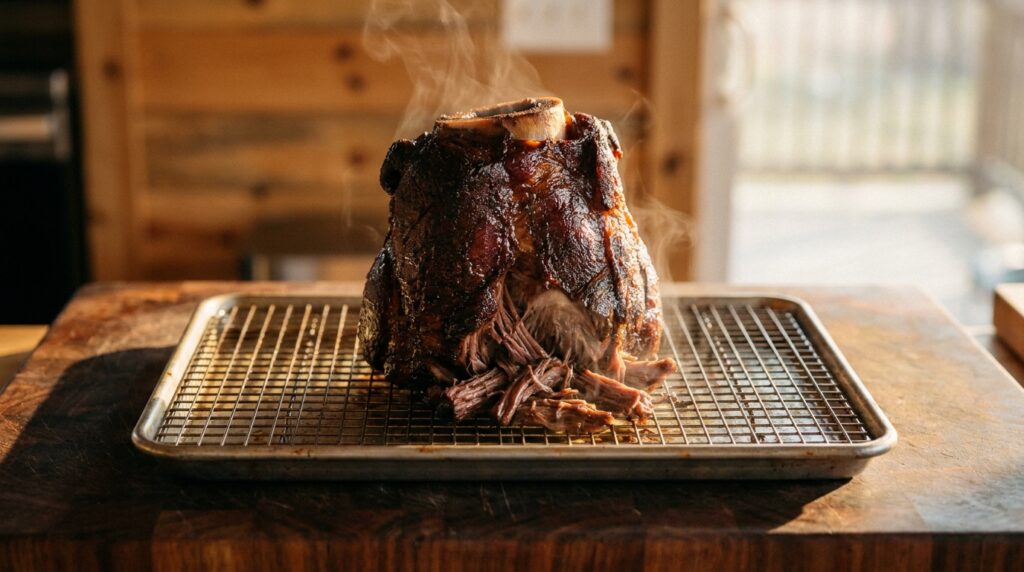
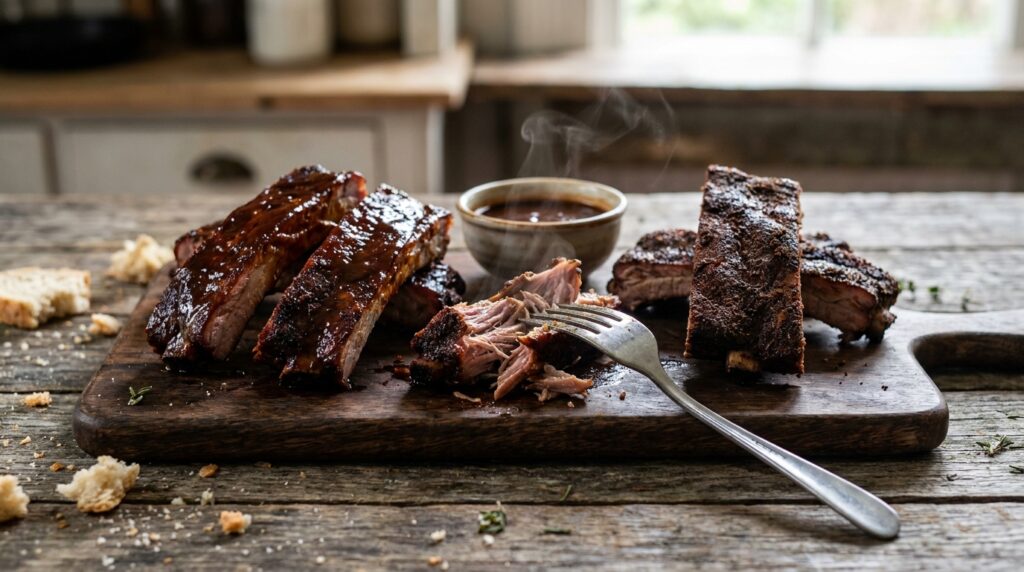


Planning, ingredients, preparation, and timing are the most critical elements to making and serving great food.
Having enough time is the most important part when it comes to slow and low!
Meat Smoking Calculator takes the thinking out of the process.
It makes cooking and serving amazing tasting smoked meats every time, on time.
SOME OF OUR FAVORITE SITES
Smoking a Turkey for Thanksgiving!
BBQ Brethren
Smoking Meat Forums
Deejay’s Smoke Pit
USDA’s Food Safety Guidelines
Smoking Pit
Virtual Weber Bullet
Smoking Times and Temps
* To help support this free site, posts contain affiliate links. If you use one of the affiliate links, we may earn a commission at no additional cost to you. As an Amazon Associate I earn from qualifying purchases.