On Time, Every Time.
How to Make Lard from Pork Fat (Step-by-Step + 10 Uses)
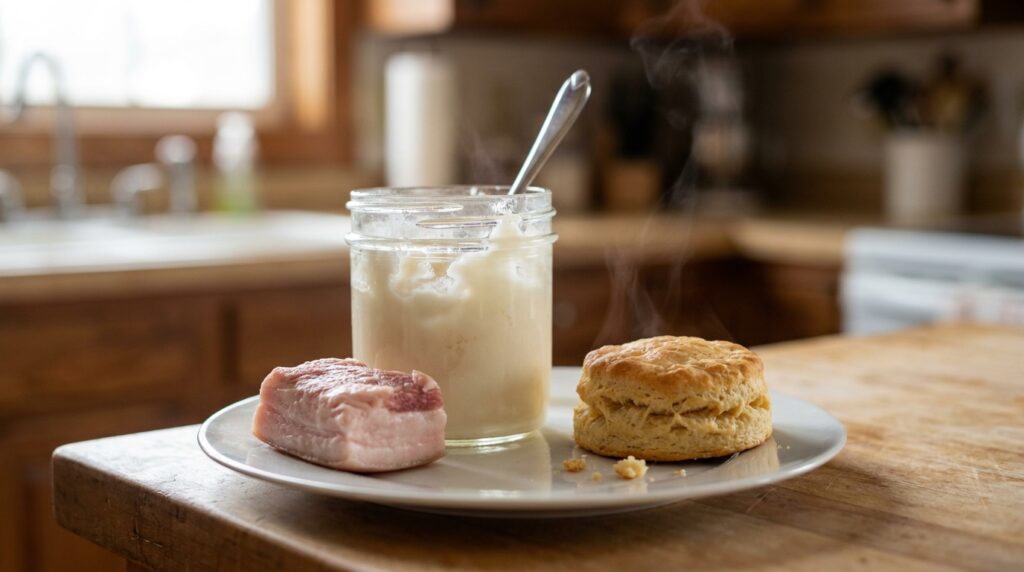
If you smoke pork belly or trim the fat cap off a pork butt, you are throwing away the makings of lard – the silky, shelf-stable pork fat that turns out the flakiest pie crust and the best refried beans you will ever eat. Rendering it is almost identical to making beef tallow, and just as easy. Here is how.
What is lard?
Lard is simply rendered pork fat – the fat cooked down low and slow until it melts, then strained clean of any meat and cracklings. Cooled, it sets into a soft, creamy white solid that keeps for months. Beef and lamb fat rendered the same way is called tallow.
Why save your pork trim
Pork is a fatty animal, and a lot of that fat ends up as trim. The fat cap off a pork butt, the trimmings from a pork belly, and back fat all render beautifully. The prize is leaf lard – the soft fat from around the kidneys – which renders into a clean, almost flavorless lard that bakers treasure. Save your trim in a bag in the freezer until you have enough for a batch.
How to render lard, step by step
- Collect and chill the fat. Save the fat cap and trim from your cooks. Cold fat is much easier to cut and handle.
- Cut it small. Dice into half-inch pieces or run it through a grinder. More surface area renders faster and cleaner.
- Render low and slow. Add the fat to a heavy pot, slow cooker, or oven-safe pot with a small splash of water to keep it from scorching at the start. Hold it low, around 225 to 250 degrees F.
- Be patient. Over 2 to 5 hours the fat melts into a clear liquid and the cracklings sink and turn golden. Stir now and then. Do not rush it with high heat, or the lard darkens and takes on a heavy, porky taste.
- Strain it. Pour through a fine mesh strainer or cheesecloth into clean glass jars. Save the cracklings – they are a snack, and they are magic in cornbread and biscuits.
- Cool and store. It turns soft and creamy white as it sets.
Storing your lard
Strained lard keeps a few weeks at room temperature in a sealed jar, several months in the refrigerator, and a year or more in the freezer. Leaf lard is the most stable. If it ever smells sour or off, throw it out.
10 ways to use lard
- The flakiest pie crust and biscuits – lard is the classic secret to tender, flaky pastry.
- Frying – chicken, doughnuts, and hash browns fry beautifully in lard.
- Refried beans and tamales – the real, traditional flavor.
- Tortillas – a spoonful makes them soft and pliable.
- Sauteing and roasting vegetables.
- Searing pork – basting a pork loin or chops in its own rendered fat.
- Cornbread and skillet breads for a rich, savory crumb.
- Seasoning cast iron.
- Soap making – lard is a gentle, traditional soap base.
- Popcorn – a nostalgic, savory treat.
Which cuts give the best fat for lard
The fattiest pork gives the most: pork belly, the fat cap off a pork butt or shoulder, and fresh ham fat. For baking, ask your butcher for leaf lard. Keep a freezer bag going and add to it after every cook until you have enough to render.
So the next time you trim a pork butt or a slab of belly, keep the fat. A little prep and a lazy afternoon on low heat turns your scraps into months of premium cooking fat – and the best pie crust of your life.
Lard FAQ
Is lard the same as tallow?
No. Lard is rendered pork fat; tallow is rendered beef or lamb fat. They render the same way, but lard is softer with a milder flavor, which is why bakers prefer it for pastry.
What is leaf lard?
Leaf lard is the soft fat from around the pig’s kidneys. It renders into the cleanest, most neutral lard and is the gold standard for pie crusts and pastry.
Is lard good for cooking?
Yes. Lard has a high smoke point, fries and bakes wonderfully, and has been a kitchen staple for centuries. As with any fat, use it as part of a balanced diet.
How long does homemade lard last?
A few weeks at room temperature in a sealed jar, several months refrigerated, and a year or more frozen. Leaf lard keeps the longest. Toss it if it ever smells rancid.
Can you make lard in a slow cooker?
Yes, and it is one of the easiest ways. Set it on low, add the diced fat with a splash of water, and let it render for several hours, stirring occasionally, then strain.
Written by John Kirker, who built the first meat smoking calculator in 2011. Times come from cooks we have actually run and logged; temperature and feel decide the finish, never the clock alone.
Reviewed by John Kirker, Founder, John Kirker Inc. - last updated July 27, 2026.

Rated 5by 500+ users
Tagline
Other Options
The MeatSmokingCalculator will help you plan the timeline for any meal.
Planning, ingredients, preparation, and timing are the most critical elements to making and serving great food.
Having enough time is the most important part when it comes to slow and low!
Meat Smoking Calculator takes the thinking out of the process.
It makes cooking and serving amazing tasting smoked meats every time, on time.
SOME OF OUR FAVORITE SITES
Smoking a Turkey for Thanksgiving!
BBQ Brethren
Smoking Meat Forums
Deejay’s Smoke Pit
USDA’s Food Safety Guidelines
Smoking Pit
Virtual Weber Bullet
Smoking Times and Temps
* To help support this free site, posts contain affiliate links. If you use one of the affiliate links, we may earn a commission at no additional cost to you. As an Amazon Associate I earn from qualifying purchases.