On Time, Every Time.
Reverse Sear: The Complete Guide
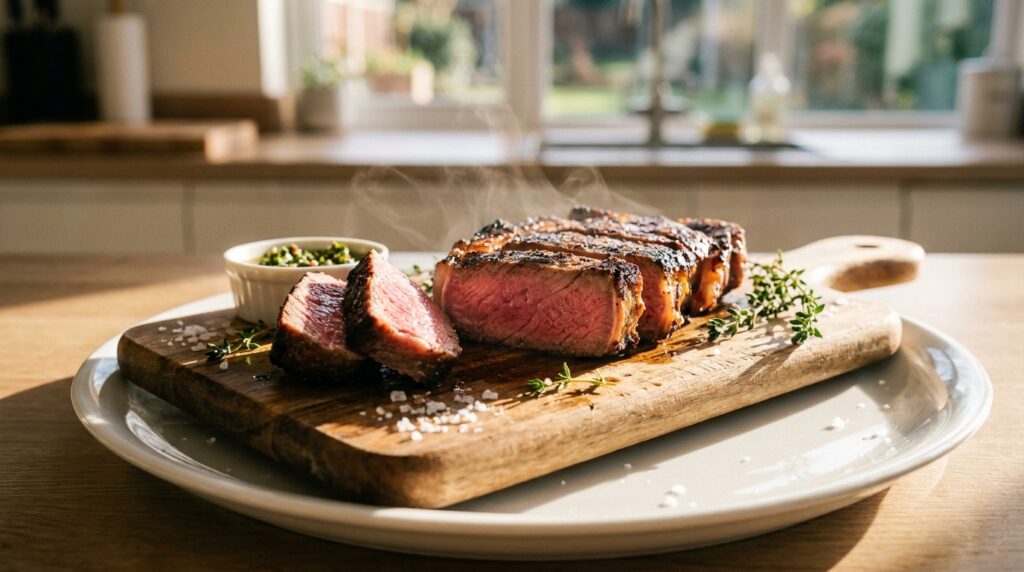
Reverse sear means cooking low and slow first, then searing hot at the end. You smoke the meat until it is 10 to 15°F below your target, then hit it with the hottest fire you have for 60 to 90 seconds a side. The result is edge-to-edge pink with a hard crust, instead of the grey band you get from searing first.
Why it works
A traditional sear-first steak cooks from the outside in. By the time the centre reaches medium-rare, the outer half has gone well past it, which is where that grey ring comes from.
Reverse sear inverts the order. The low stage brings the whole piece up gently and evenly, so the temperature difference between the edge and the centre stays small. The sear then happens fast enough that it browns the surface without driving heat inward. You get crust and an even interior, which searing first cannot give you.
There is a bonus: a dry surface browns better. Forty-five minutes in a smoker dries the exterior nicely, so the sear is faster and the crust is harder.
The method
- Salt early. Season and leave it uncovered in the fridge for a few hours or overnight. This seasons the interior and dries the surface.
- Smoke at 225 to 250°F until the internal temperature is 10 to 15°F below your target. For medium-rare, pull around 115 to 120°F.
- Rest 10 minutes while you get the sear surface screaming hot. This is also when carryover settles.
- Sear 60 to 90 seconds a side over the hottest fire you have: cast iron, a chimney of coals, a searing burner.
- Serve immediately. Unlike a normal steak, it does not need a second rest. It already had one.
Which cuts it suits
Reverse sear rewards thick cuts of tender meat that you want to serve pink. It is the right method for:
Which cuts it does not
Reverse sear is not a universal upgrade. Skip it for:
- Thin steaks. Under about an inch there is no interior to protect, and the low stage just overcooks it before you ever sear.
- Anything cooked past medium. The whole point is preserving a pink centre.
- Collagen-heavy cuts like brisket, pork butt and short ribs. They need hours above 190°F to render, which is a completely different problem.
- Poultry. Skin needs sustained heat to render, so a quick sear at the end leaves it flabby underneath.
The mistakes that cost you
Pulling too late. The most common error by far. If you smoke to 130°F and then sear, you are eating medium-well. Carryover plus the sear adds 10 to 15°F, so build that in.
A sear that is not hot enough. A lukewarm pan steams the surface grey instead of browning it. If it is not smoking, it is not ready.
Searing a wet surface. Pat it dry before it hits the heat. Any surface moisture has to boil off before browning starts, and that is time your interior is cooking.
Frequently asked questions
What temperature do you pull meat before reverse searing?
10 to 15°F below your target. For medium-rare, that means pulling around 115 to 120°F, because the sear and carryover will add the rest.
How thick does a steak need to be for reverse sear?
At least an inch, and 1.5 inches or more is better. Thinner steaks have no interior to protect, so the method gains you nothing and risks overcooking.
Do you rest meat after a reverse sear?
Not really. The rest happens before the sear, while the fire heats up. Once it comes off the sear you can serve it straight away.
Can you reverse sear a brisket?
No. Brisket is full of collagen that needs hours above 190°F to break down. Reverse sear is for tender cuts served pink, not for barbecue cuts that need rendering.
Set your cut, thickness and dinner time in the calculator and it schedules the smoke, the rest and the sear backward from when you want to eat. See also the full smoking times and temperatures chart.
Written by John Kirker, who built the first meat smoking calculator in 2011. Times come from cooks we have actually run and logged; temperature and feel decide the finish, never the clock alone.
Reviewed by John Kirker, Founder, John Kirker Inc. - last updated August 12, 2026.

Rated 5by 500+ users
Tagline
Other Options
The MeatSmokingCalculator will help you plan the timeline for any meal.
Planning, ingredients, preparation, and timing are the most critical elements to making and serving great food.
Having enough time is the most important part when it comes to slow and low!
Meat Smoking Calculator takes the thinking out of the process.
It makes cooking and serving amazing tasting smoked meats every time, on time.
SOME OF OUR FAVORITE SITES
Smoking a Turkey for Thanksgiving!
BBQ Brethren
Smoking Meat Forums
Deejay’s Smoke Pit
USDA’s Food Safety Guidelines
Smoking Pit
Virtual Weber Bullet
Smoking Times and Temps
* To help support this free site, posts contain affiliate links. If you use one of the affiliate links, we may earn a commission at no additional cost to you. As an Amazon Associate I earn from qualifying purchases.