On Time, Every Time.
The Stall: What It Is and How to Beat It
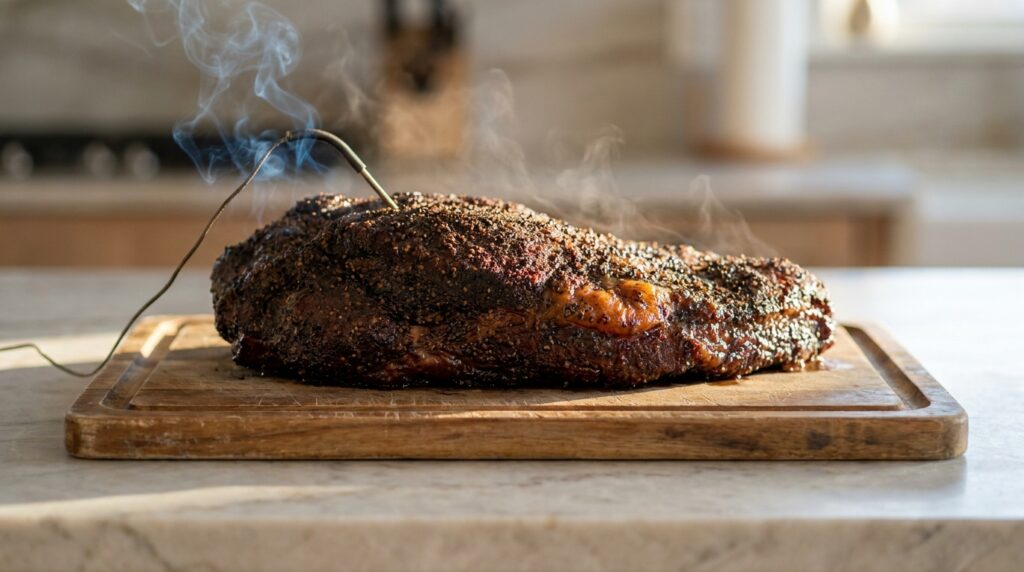
The stall is when your meat’s internal temperature stops climbing, usually between 150 and 170°F, sometimes for hours. Your smoker is fine. Your thermometer is fine. What is happening is evaporative cooling: moisture leaving the surface cools the meat at almost exactly the rate your fire heats it. The two cancel out, and the number sits still.
What the stall looks like. Internal temperature of a big cut over a 14 hour low-and-slow cook. The flat stretch is evaporative cooling; the thermometer, not the clock, tells you where you are.
The cuts that stall. Collagen cuts cook past the stall to probe-tender; each guide plans the cook around it.
- Brisket (225°F / 107°C, pull 200°F / 93°C)
- Beef Ribs (225°F / 107°C, pull probe-tender)
- Chuck Roast (225°F / 107°C, pull 190°F / 88°C)
- Pastrami (250°F / 121°C, pull 203°F / 95°C)
- Beef Jerky (170°F / 77°C, pull probe-tender)
- Beef Cheeks (250°F / 121°C, pull 205°F / 96°C)
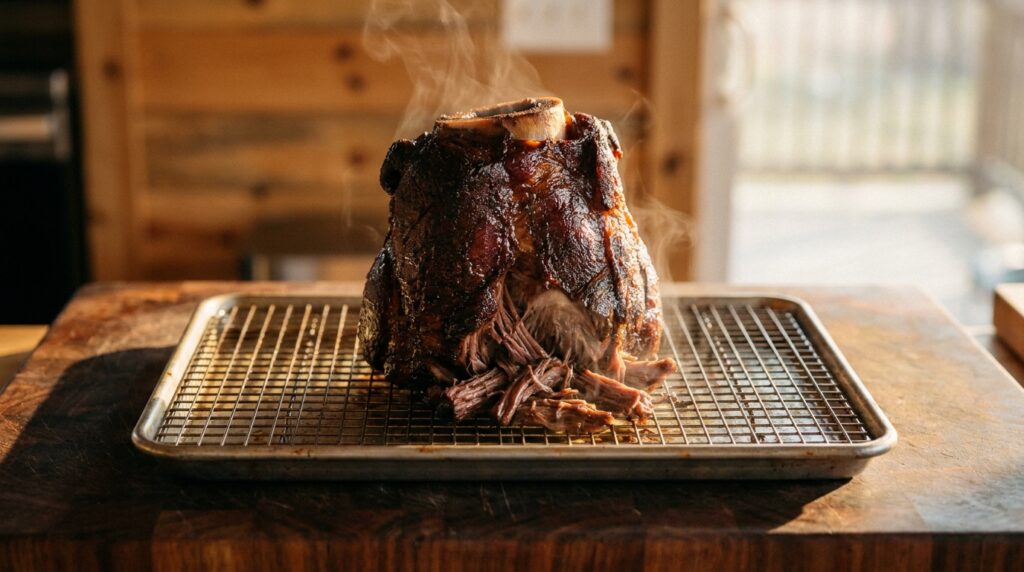
- Whole Beef Shank (Thor's Hammer) (275°F / 135°C, pull 205°F / 96°C)
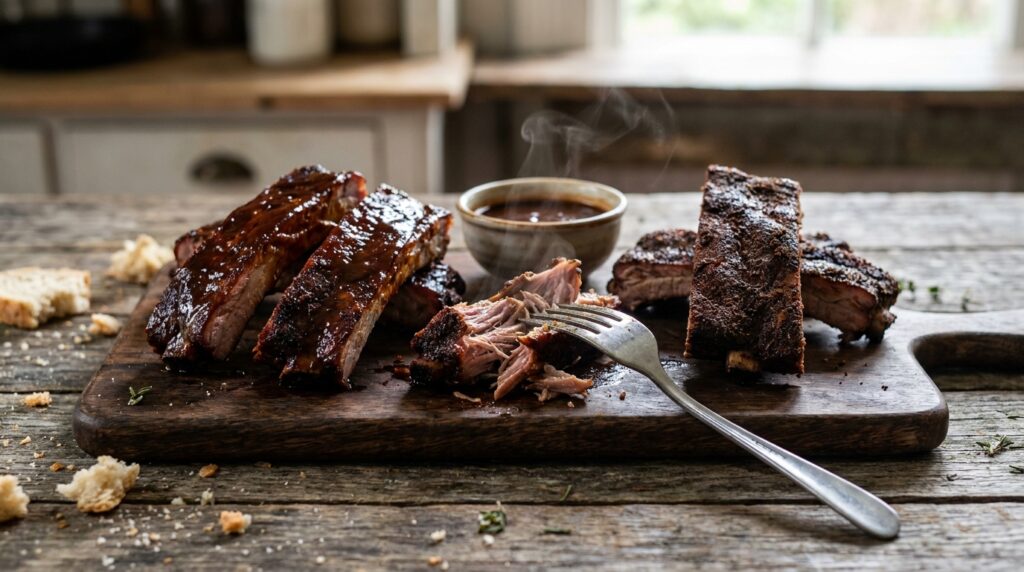
- Baby Back Ribs (225°F / 107°C, pull probe-tender)
- Spare Ribs (225°F / 107°C, pull probe-tender)
- Pork Belly (250°F / 121°C, pull 200°F / 93°C)
- Country-Style Ribs (225°F / 107°C, pull 195°F / 91°C)
- Whole Hog (250°F / 121°C, pull 195°F / 91°C)
- Venison Roast (250°F / 121°C, pull 200°F / 93°C)
- Venison Jerky (170°F / 77°C, pull probe-tender)
- Wild Boar (250°F / 121°C, pull 195°F / 91°C)
- Bear (250°F / 121°C, pull 200°F / 93°C)
- Cabrito (Goat) (250°F / 121°C, pull 195°F / 91°C)
What is actually happening
It is the same physics as sweating. As moisture evaporates off the surface it carries away a lot of heat, and meat has a great deal of moisture to give. Once the surface reaches the point where evaporation runs hard, the cooling can match a 225°F fire almost exactly.
For years people blamed collagen breaking down. That happens in the same range, but it is not the cause. The proof is simple: wrap the meat so it cannot evaporate freely, and the stall disappears within minutes.
How long it lasts
Anywhere from 45 minutes to six hours. It depends on humidity in the pit, airflow, the size of the cut and how much surface area is exposed. A big packer brisket in a dry, breezy pit can sit at 160°F for most of an afternoon.
This is exactly why cooking to a schedule fails. The stall is the single biggest source of variance in a long cook, and it is why every serious plan builds in a buffer.
Option one: wait it out
Doing nothing is a legitimate choice, and it produces the best bark. All that evaporation is what concentrates the surface and builds the crust that unwrapped barbecue is famous for.
The cost is time and nerve. You need to have started early enough that a three hour stall does not wreck dinner, and you need to not panic and crank the heat. Raising the pit temperature mid-stall mostly just dries the surface further.
Option two: wrap through it
Wrapping stops evaporation, so the temperature climbs again almost immediately. It is often called the Texas crutch, which makes it sound like cheating. It is not – it is a trade.
- Foil is the fastest. It seals completely, so the meat effectively braises. It also softens the bark you have built.
- Butcher paper breathes. It slows evaporation without stopping it, so you push through the stall while keeping most of the bark. This is the usual compromise for brisket.
- Wrap when the bark is set, not at a specific temperature. It should look dry and not smear when you touch it. That is usually somewhere around 160 to 165°F, but look at the meat rather than the number.
There is more detail on the trade-offs in to wrap or not to wrap.
What not to do
Do not raise the pit temperature to force it. More heat means more evaporation, which means more cooling. You mostly get a drier surface.
Do not spritz constantly. Every spray puts liquid on the surface that has to evaporate, which is the very thing holding your temperature down. Occasional spritzing helps colour; frequent spritzing extends the stall.
Do not assume it is broken and pull it. Meat that comes off at 165°F is tough. The collagen has not rendered.
Frequently asked questions
What causes the BBQ stall?
Evaporative cooling. Moisture leaving the surface carries away heat at roughly the same rate the fire adds it, so the internal temperature stops rising until the surface dries out.
At what temperature does the stall happen?
Usually between 150 and 170°F, most often right around 160°F, though it varies with humidity, airflow and the size of the cut.
How long does the stall last?
Between 45 minutes and six hours. A large brisket in a dry pit can sit at the same reading for most of an afternoon, which is why you plan with a buffer.
Should I wrap to beat the stall?
Only if you need the time. Wrapping in butcher paper pushes through quickly while keeping most of the bark; foil is faster but softens it. Riding it out unwrapped gives the best bark.
The brisket calculator builds stall time into the schedule so your finish time survives it. See also the smoking times and temperatures chart.
Written by John Kirker, who built the first meat smoking calculator in 2011. Times come from cooks we have actually run and logged; temperature and feel decide the finish, never the clock alone.
Reviewed by John Kirker, Founder, John Kirker Inc. - last updated October 6, 2026.

Rated 5by 500+ users
Tagline
Other Options
The MeatSmokingCalculator will help you plan the timeline for any meal.
Planning, ingredients, preparation, and timing are the most critical elements to making and serving great food.
Having enough time is the most important part when it comes to slow and low!
Meat Smoking Calculator takes the thinking out of the process.
It makes cooking and serving amazing tasting smoked meats every time, on time.
SOME OF OUR FAVORITE SITES
Smoking a Turkey for Thanksgiving!
BBQ Brethren
Smoking Meat Forums
Deejay’s Smoke Pit
USDA’s Food Safety Guidelines
Smoking Pit
Virtual Weber Bullet
Smoking Times and Temps
* To help support this free site, posts contain affiliate links. If you use one of the affiliate links, we may earn a commission at no additional cost to you. As an Amazon Associate I earn from qualifying purchases.