On Time, Every Time.
Salmonella and the Smoker: The Exact Temperature and Time That Kills It
Salmonella dies on a time-and-temperature curve, not at one number. Held at a true internal 150F it is killed in about 3 minutes in poultry and about 1 minute in beef, pork and lamb. At 140F it takes about 26 minutes in poultry and about 12 minutes in beef, pork and lamb. At 165F poultry and 158F beef the kill is instant. The 150F and 140F rows are published figures in USDA FSIS Appendix A (rev. 2021). Below about 130F salmonella is not reliably killed at all, and between 40F and 130F it actively multiplies.
- Salmonella is the pathogen USDA builds its poultry tables around, so hitting its numbers handles E. coli and Listeria on the way.
- Appendix A targets a 7-log reduction: all but one bacterium in ten million.
- Only two hold rows are published: 150F and 140F.
- Every lid opening costs you elapsed time, and it costs more the lower you hold.
- On a smoker, poultry has no informed-choice lane. Pull at 165F.
How long does it take to kill salmonella at each temperature?
Two published rows, quoted directly. The time is how long the thickest part holds at that internal temperature after it arrives there, not how long it took to get there.
| Internal temp | Poultry | Beef, pork, lamb |
|---|---|---|
| 150F | About 3 minutes | About 1 minute |
| 140F | About 26 minutes | About 12 minutes |
Around that band sit the fixed thresholds. The kill is instant at 165F for poultry and 158F for beef, pork and lamb. Below about 130F, salmonella is not reliably killed at any duration, and 40F to 130F is the growth zone, so treat 130F as the practical floor.
A quick blast to 165F and a patient 3 minute hold at 150F achieve exactly the same kill. One is just far juicier.
Note on the rows we do not publish
Between 150F and 165F our published source gives nothing; treat anything above 150F as under 3 minutes for poultry and instant for beef once you clear 158F. Between 140F and 150F the honest read is a bracket: about 3 to 26 minutes for poultry, about 1 to 12 minutes for beef, pork and lamb, interpolated by us, not published. Below 140F our source stops entirely, so we publish no time at all. For context, the USDA whole-cut consumer floor is 145F plus a 3 minute rest, and the ground-meat target is 160F.
Appendix A prices its times against stated assumptions: fat content, humidity in the oven or pit, and how fast the meat came up to temperature. Your exact row can shift with those conditions. Look up Appendix A of the 2021 revised FSIS cooking guideline and find your meat and temperature to read the conditions yourself.
The belief worth correcting: 165F is not the safety line
Most readers arrive believing 165F is the temperature that kills salmonella and anything below it is a gamble. That is not what the data says. 165F is where the required hold time rounds to zero seconds, which makes it a convenience number, not a threshold.
Four terms, one sentence each. Hold time is the clock that starts once the coldest part of the meat reaches target and stays at or above it. Pasteurization means the pathogen load has been driven to a defined safe level, not that the meat is sterile. A 7-log reduction is that defined level: all but one bacterium in ten million, the standard commercial processors are held to. Instant kill means the hold time rounds to zero.
The whole system around this one bug lives in our pillar guide to smoked meat food safety, the danger zone and the 140F line. Salmonella is the pathogen the tables are built around: Appendix A sets its hold times against a 7-log salmonella reduction, so a cook that satisfies the salmonella row has already dealt with E. coli, including O157:H7, and Listeria.
How long can meat be held at 140F to 150F safely?
Long enough to pasteurize it, and the two ends of that band are nowhere near each other. Poultry owes about 26 minutes at 140F versus about 3 at 150F; beef, pork and lamb owe about 12 minutes versus about 1.
That gap, not the kill, is the whole argument for 150F on anything with a fire in it. You are buying 10F of cushion for lid openings and probe error. The full trade is laid out in our 140F vs 150F hold comparison.
What a lid opening actually costs, measured
How a lid opening resets the hold clock
0:00 reach 140FHold clock starts, 12 minutes owed0:07 lid opens7 minutes banked, internal sags to 138F0:11 back at 140FClock restarts, 5 minutes still owed0:16 done12 banked minutes, 16 minutes elapsed
Field note from a 22 inch kettle running an offset snake, grate temp steady at 275F, ambient 61F, a bone-in chicken thigh probed in the thickest part with a two-probe leave-in thermometer. Lid up for 40 seconds to move a piece. Internal read 149F at the moment the lid came off, sagged to 143F, and took 6 minutes 20 seconds to climb back to 149F. A 6F drop and better than six minutes of recovery, on a small cooker at a hot pit temp, for less than a minute of lid time.
The lower you set your hold, the more expensive every lid opening becomes.
Why poultry gets no informed-choice lane on a pit
The 26 minute figure is not the problem. Documenting it is. Appendix A prices its poultry times against a controlled-humidity oven and a measured come-up rate, and a stick burner on a windy afternoon documents neither. You cannot state your humidity, you cannot state how fast the bird climbed, so you cannot claim the row.
Then add the schedule. A 26 minute obligation at a true 140F internal means the coldest part of the bird sits within a couple of degrees of the low end of the safe range for nearly half an hour while a fire that swings 25F either side of setpoint tries to hold it there, before any lid openings are counted. On a rising pit cook the internal does not park at 140F anyway; it drives through it, which is why the hold is a water-bath trick, not a pit one.
If you want 140F to 150F poultry, the named alternative is sous vide. A circulator holds a set water temperature with no swing, and because the bath is a saturated environment at a fixed temperature, it gives you the two conditions Appendix A prices its times against: a humidity you can state and a come-up rate you can actually measure from a known bath temperature and a known thickness. A pit gives you neither, which is why the same 26 minute poultry row that is undocumentable over fire is routine in a water bath.
So on the smoker, poultry pulls at 165F. That is why our smoked chicken burger calculator preselects Well and warns the moment you drop below it. If you would rather not track dwell time at all, the USDA instant-kill minimums are 165F for poultry whole or ground, 160F for ground beef, pork and lamb, and 145F with a 3 minute rest for whole cuts.
Plan the cook so the hold is possible
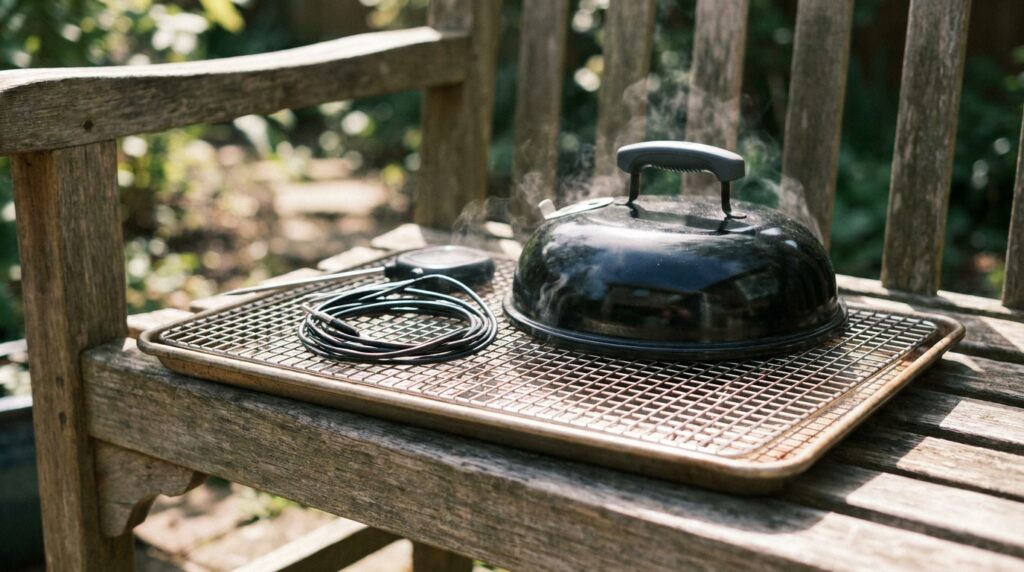
A hold you cannot schedule is a hold you will not finish. Size the cook first, then pick the row your gear can defend.
A worked hold: beef at 150F on a pit
Say you are finishing a pork loin or a beef roast and you want the 150F row, which owes about 1 minute for beef, pork and lamb. Set the pit at 250F to 275F and expect the grate to swing roughly 25F either side of setpoint on a live fire, which is why the target internal, not the pit reading, runs the clock. Leave two probes in: one in the thickest part of the meat, one at the grate. When the meat probe reads 150F, start a timer. Because a 25F pit swing only moves the deep interior slowly, one banked minute is easy to bank twice over, so run the timer to 3 minutes and pull. If the internal sags below 150F at any point, note the time, wait for it to climb back, and restart the timer from zero. Even with one 40 second lid opening, a 6F sag and a six minute recovery, you finish the obligation inside about 10 minutes of wall clock.
Now run the same protocol at 140F on beef and it stops being casual: 12 banked minutes, and a probe error of 3F erases the hold. What interruptions do to those numbers is worked out above in what a lid opening actually costs. That is the honest verdict: a 140F hold is practical in sous vide, where the temperature does not move and the come-up rate is knowable, and not on a pit. On live fire, choose 150F, or for poultry pull at 165F. If you want to check your own numbers against the source rows, see how to verify a pasteurizing hold on a real smoker.
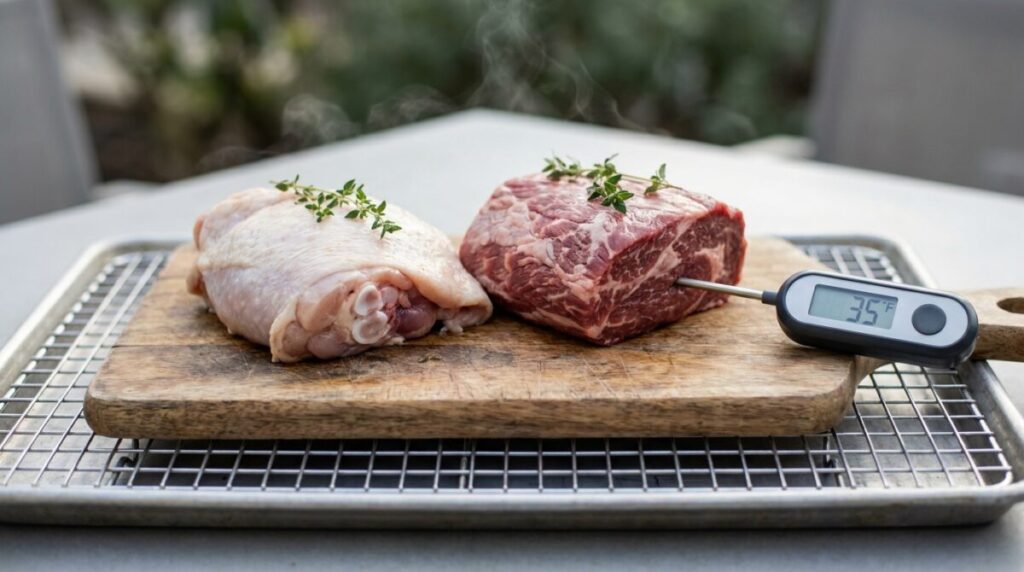
- Probe the thickest part, not the easiest part. The ladder measures the coldest spot.
- Start the hold timer when the probe reads target, not when the pit does.
- If internal drops below target, note the time and restart the clock when you come back.
- Pick 150F over 140F on live fire for the 10F of cushion.
- For poultry on a smoker, skip the arithmetic and pull at 165F.
Does cooking hotter than 165F kill more salmonella?
No. Virtually all pathogens are already dead at 165F, so going higher buys no extra safety, only dryness. Heat contracts muscle fibers and squeezes moisture out, which is why chicken taken to 175F is dry while chicken finished lower stays juicy. Overcooking is a texture decision wearing a safety costume, and of the 77 published articles and guides on this site, the ones that change people’s cooking most are the ones that hand back those degrees.
FAQ
What temperature kills salmonella instantly?
165F for poultry and 158F for beef, pork and lamb. Those are the instant-kill thresholds, meaning the required hold time is effectively zero seconds, and they are exactly why the familiar USDA consumer targets exist.
Does salmonella die at 150 degrees?
Yes. At a steady internal 150F, poultry is pasteurized after about 3 minutes and beef, pork or lamb after about 1 minute. Both are published Appendix A figures. Our breakdown of how long at 150F it takes to kill bacteria covers the caveats.
How long does salmonella take to die at 140F?
About 26 minutes for poultry and about 12 minutes for beef, pork and lamb, held at a true 140F internal. 140F is the low end of the safe range with no margin, so every temperature swing costs you elapsed time; see what a lid opening actually costs above for the measured numbers.
Can salmonella survive smoking?
Yes, if the meat never reaches a killing time-and-temperature combination. Smoke is flavor, not a sanitizer. Between 40F and 130F bacteria actively multiply, and below about 130F they are not reliably killed at all, so a smoke that stalls in that band is a growth chamber, not a cook.
Is 145F enough to kill salmonella in chicken?
Our source does not publish a 145F row, so the honest answer is an interpolated bracket of about 3 to 26 minutes for poultry, and that is a hold a pit cannot document. On a smoker, pull chicken at 165F. If you want chicken finished in the 140F to 150F band, do it sous vide, where the bath temperature and come-up rate are both knowable.
Does killing salmonella mean E. coli and Listeria are dead too?
Yes. Salmonella is the pathogen USDA builds its poultry tables around, and Appendix A prices its hold times against a 7-log salmonella reduction, so any time-and-temperature combination that satisfies a salmonella row has already handled E. coli, including O157:H7, and Listeria. Set your target, start the timer when the meat probe says so, and let the ladder do the rest.
Written by John Kirker, who built the first meat smoking calculator in 2011. Times come from cooks we have actually run and logged; temperature and feel decide the finish, never the clock alone.
Reviewed by John Kirker, Founder, John Kirker Inc. - last updated August 29, 2026.
Sources for this article
- USDA FSIS Appendix A (rev. 2021) published rows: 150F = about 3 min poultry, about 1 min beef/pork/lamb; 140F = about 26 min poultry, about 12 min beef/pork/lamb
- Instant-kill thresholds: 165F poultry, 158F beef/pork/lamb
- 7-log reduction of Salmonella = all but one in ten million; commercial processor standard
- Salmonella is the most heat-resistant common pathogen; killing it kills E. coli and Listeria
- Below 130F not reliably killed; 40 to 130F is the growth zone; 130F practical floor
- Source jumps 140F to 150F, so 145F is a bracket and nothing below 140F is published
- USDA consumer minimums: 165F poultry, 160F ground beef/pork/lamb, 145F plus 3 minute rest whole cuts
- Cooking above 165F buys no safety, only dryness; 175F chicken is dry
Facts drawn from this site's own documented knowledge and first-hand experience.

Rated 5by 500+ users
Tagline
Other Options
The MeatSmokingCalculator will help you plan the timeline for any meal.
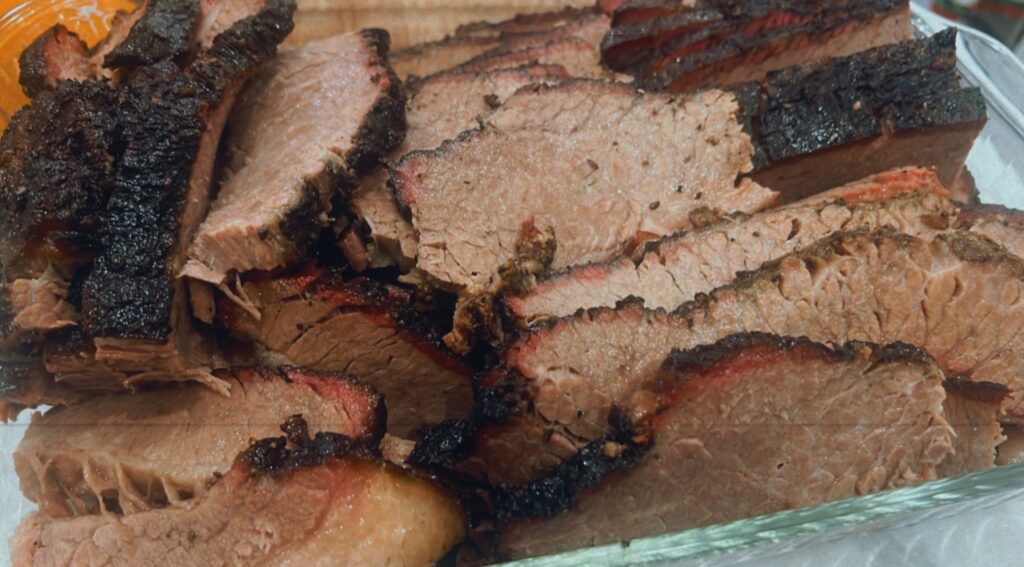
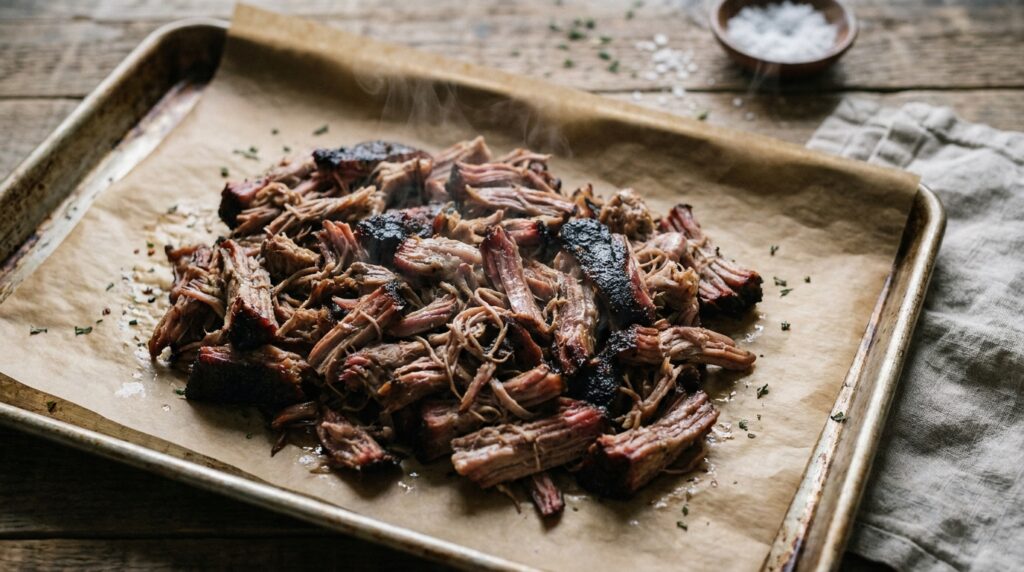
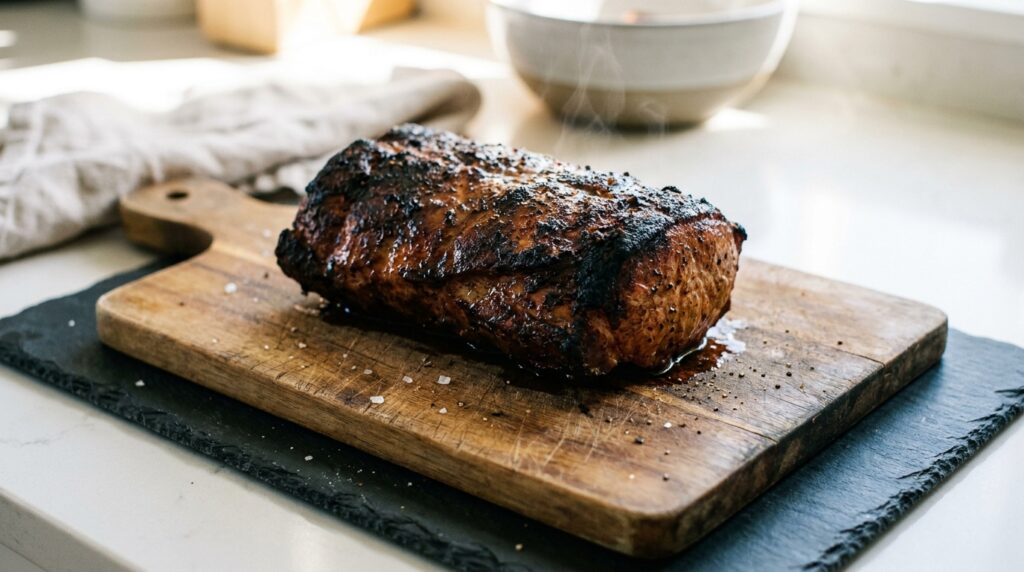
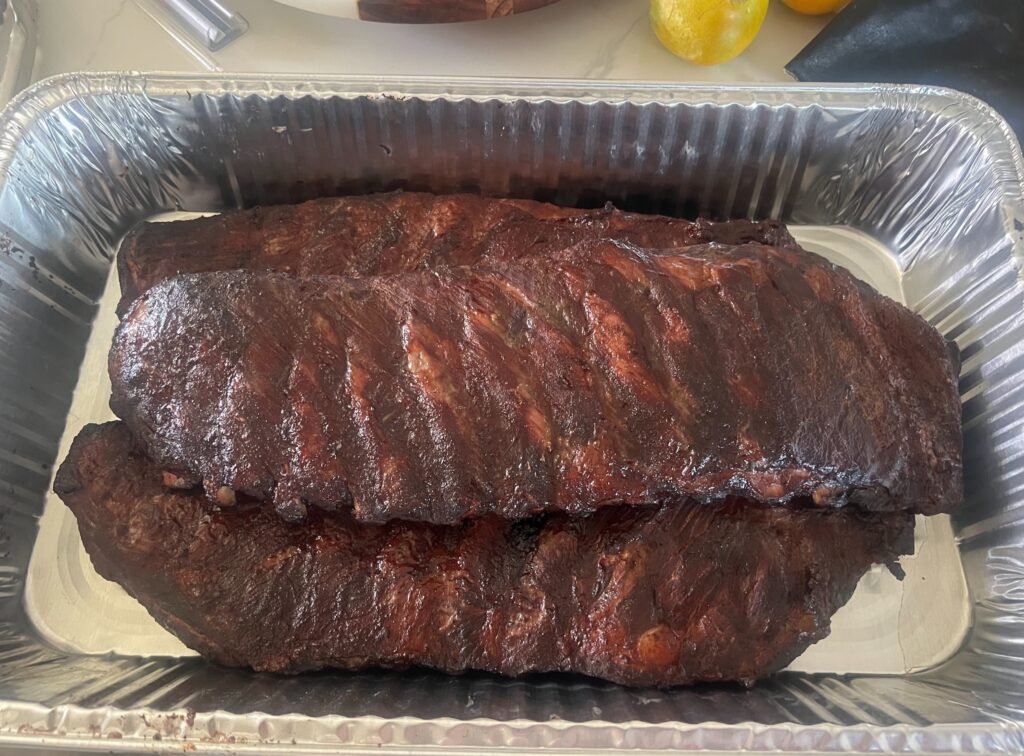
Planning, ingredients, preparation, and timing are the most critical elements to making and serving great food.
Having enough time is the most important part when it comes to slow and low!
Meat Smoking Calculator takes the thinking out of the process.
It makes cooking and serving amazing tasting smoked meats every time, on time.
SOME OF OUR FAVORITE SITES
Smoking a Turkey for Thanksgiving!
BBQ Brethren
Smoking Meat Forums
Deejay’s Smoke Pit
USDA’s Food Safety Guidelines
Smoking Pit
Virtual Weber Bullet
Smoking Times and Temps
* To help support this free site, posts contain affiliate links. If you use one of the affiliate links, we may earn a commission at no additional cost to you. As an Amazon Associate I earn from qualifying purchases.