On Time, Every Time.
Overnight Hold Brisket: How to Hold at 150F for 8 to 18 Hours
To hold a brisket overnight, smoke it the day before, pull it a few degrees underdone at about 195°F, wrap it tight in foil, and park it in a unit that holds a steady 150°F, a holding cabinet, a calibrated home oven or a sous vide bath. It can sit there for 8 to 18 hours and only get better, because 150°F stays comfortably above the 140°F food-safety line while collagen keeps converting to gelatin. A cooler and towels will not do it, since that only slows a decline.
That is Steve Gow of Smoke Trails BBQ’s fix for the real brisket problem, which is cooking it same-day and running late on a clock you cannot control.
The hold, not the last few degrees on the pit, is what finishes tenderizing it. Everything below – trim, salt, foil boat, hold, slice – is that schedule, planned backward from when you want to eat, so the brisket is ready whenever you are.
Watch: The Biggest Brisket Mistake Nobody Talks About by Steve Gow (Smoke Trails BBQ)
Schedule the overnight hold to the minute
Set your serving time and the calculator plans the cook backward for you.
What you’ll need
- 1 whole brisket (trimmed)
- Fine table salt (to season)
- Smoke Trails BBQ Brisket Rub (generous layer)
How to do the overnight hold, step by step
- Trim the brisket and season first with a light layer of fine table salt, which penetrates faster than kosher salt, then coat generously with brisket rub.
- Insert a reliable wireless probe thermometer and smoke the brisket at a steady 250°F, adding fuel whenever the ambient temp dips.
- Once the brisket hits about 150°F internal (roughly 5 hours in) with a set bark, half-wrap it in a foil boat to keep it moist while still allowing smoke and fat rendering on top.
- Continue smoking until the brisket reaches 195°F internal, about 12 hours total – this is intentionally under the typical 203°F+ finish point.
- Pull the brisket, drain most but not all of the juices, then fully wrap it in foil.
- Place the wrapped brisket in a holding oven (or a home oven calibrated to hold at 150°F) overnight, letting it gradually decline from 195°F down to 150°F over 4-6 hours to keep tenderizing without drying out.
- If using a home oven, calibrate it first: set a pan of water with your probe inside, run the oven at its lowest setting (often 175°F), and adjust down until the water flatlines at 150°F.
- The next day, pull the brisket from the hold at any time – lunch or dinner – slice, and serve; the extended low hold keeps it moist and tender without a rushed same-day rest.
Is an overnight hold safe?
Yes, for a whole-muscle cut like brisket, as long as the meat never drops below 140°F. That is the food-safety line: above it the brisket is safe indefinitely, below it the danger-zone clock starts. An overnight hold is only risky when the temperature drifts under that number while you are asleep and nobody is watching the probe.
That is why the target is 150°F rather than something cooler. There is nothing magic about 150°F itself; it is a cushion above the 140°F line, so a swing in your oven or holding cabinet eats into the cushion instead of pushing the brisket into unsafe territory. It also happens to be the temperature where collagen keeps converting, so the safety margin and the tenderizing window are the same setting. More on choosing between the two numbers is in our comparison of 140°F vs 150°F as a hold target.
How long the hold can safely run
At a steady 150°F you can hold a brisket up to about 18 hours, and it only gets better over that stretch. The rule is not a stopwatch, it is a floor: stay above 140°F the entire time and the hold can run as long as your schedule needs. That is what makes an overnight hold practical, since you can pull at lunch or at dinner the next day without recalculating anything.
Why a cooler hold is riskier than a temperature-controlled unit
A cooler packed with towels holds nothing. It only slows a decline, so the brisket is falling from the moment you close the lid, and overnight that fall goes past the line. A holding oven, a warming cabinet, a calibrated home oven or a sous vide bath with the wrapped brisket bagged all do something a cooler cannot: they add heat back. The brisket parks at 150°F instead of sliding toward the danger zone, which is why the step-by-step above calls for a unit you can set rather than an insulated box. If you are moving the brisket to a venue rather than holding it in place, our guide to holding and transporting smoked meat covers loading, stacking and monitoring on the drive.
Holding gear compared: temperature floor, max hold, failure mode
Every option below is judged on three things: the lowest steady temperature it can actually hold, how long a wrapped brisket realistically stays above the 140°F line in it, and the specific way it lets you down. Anything that adds heat back can park a brisket at 150°F; anything that only insulates is on a countdown from the moment you shut the lid.
Dedicated holding cabinet or hot box
Temperature floor: a true 150°F setpoint, held by a thermostat, which is what this class of gear exists to do. Max realistic hold: the full 18 hours, and the brisket only gets better across it. Failure mode: cost and footprint rather than performance, plus a power interruption you do not notice at 3am, so keep a probe alarm running even in the unit that needs it least. This is the piece of equipment the step-by-step above assumes.
Sous vide bath
Temperature floor: 150°F exactly, with tighter control than anything else on this list, since a circulator holds water to within a degree. Max realistic hold: 18 hours, with the wrapped brisket bagged so no water touches it. Failure mode: bark. A brisket sitting in a bag in hot water steams its own crust soft, and a leaking bag or a bath that evaporates below the circulator’s minimum line shuts the unit off mid-hold.
Calibrated home oven at its lowest setting
Temperature floor: often 175°F as labeled, which is why the calibration step matters. Max realistic hold: 18 hours once you have proven the setpoint. Failure mode: the dial lying to you. A home oven cycles wide around its setpoint, so an uncalibrated 175°F setting can swing hot enough to overcook the brisket or, on a cheap element, drift cool while you sleep.
Warming drawer
Temperature floor: usually in the 140°F to 160°F range on its low setting, which lands in the right window but is often marked as low, medium and high rather than in degrees. Max realistic hold: overnight is workable if a probe confirms the drawer sits at or above 150°F, but treat it as unproven until you log it. Failure mode: an unmarked setting that actually holds at 130°F to 140°F, which erases the cushion above the food-safety line, plus a drawer too small to take a full packer without cramming it against a hot wall.
Cooler or insulated box
Temperature floor: none. It has no setpoint at all, only a decline rate, because it adds no heat back. Max realistic hold: roughly eight hours before you serve. In one logged hold, a 14 pound wrapped packer loaded into a preheated insulated box at 200°F internal with 72°F garage ambient read 152°F at hour six, 146°F at hour seven, 141°F at hour eight, and dropped below 140°F during hour nine. Failure mode: that decline continuing while you are asleep, which is exactly the overnight scenario this method is built around. Fine for an afternoon, wrong tool for 18 hours.
Frequently asked questions
Why smoke the brisket the day before instead of same-day?
Cooking same-day creates time pressure that leads to rushed rests and dried-out meat; smoking a day ahead removes that stress and lets a slow overnight hold finish tenderizing the brisket. The full version of that cook, smoke through hold, is in our guide to smoked brisket with a long hot hold.
Why pull the brisket at 195°F instead of the usual 203°F+?
Pulling slightly early leaves some water-holding capacity intact, since the overnight decline from 195°F to 150°F still renders collagen without fully destroying the meat's ability to hold moisture.
How do I calibrate a home oven for holding?
Set a probe in a pan of water, run the oven at its lowest setting, and let it flatline; adjust the set temp up or down until the water settles at 150°F.
Can I fully wrap in foil instead of using a foil boat?
Yes – a full foil wrap works too, and a wireless probe like the Typhur Sync Gold can maintain connection even through foil and the smoker or oven lid.
How long can you hold a brisket overnight?
A normal overnight hold runs 8 to 14 hours from the time you pull the brisket at 195°F until you slice it the next day, and that whole stretch is working in your favor as collagen keeps converting to gelatin.
Can you hold a brisket at 170°F?
It is safe, but it is not a good overnight number. At 170°F the brisket is still cooking rather than resting: muscle fibers keep contracting and squeezing out moisture, and over 10 or 12 hours you can render a 195°F brisket into something mushy and dry at the same time. 170°F is fine for a short 2 to 4 hour hold before service, especially if you pulled the brisket a little under. For anything overnight, drop the setpoint to 150°F and accept the slower, gentler finish.
Do you hold brisket wrapped in foil or butcher paper?
Foil, for an overnight hold. Butcher paper breathes, which is great on the pit because it protects bark, but across 12 hours in a holding oven that same breathability lets moisture escape and the edges of the flat dry out. Fully wrap the brisket in foil, drain most but not all of the rendered juices first so it is not swimming, and seal it tight. If you want to protect the bark, rest the brisket uncovered for 15 to 20 minutes before wrapping so surface steam escapes, or wrap in paper first and then foil over the top as a moisture barrier.
How do you reheat or serve brisket after a 12+ hour hold?
You do not reheat it. A brisket that stayed at 150°F never cooled down, so it is already at serving temperature: take it out, unwrap it, and slice straight away. If the bark went soft in the foil, unwrap it and put the brisket in a 275°F oven or back on the smoker for 15 to 20 minutes to firm the crust before slicing. Slice against the grain to order rather than all at once, since sliced brisket dries within minutes, and spoon the reserved foil juices over the slices on the tray. Only if the brisket did drop below 140°F overnight should you treat it as a reheat: chill it fully, then bring it back to 150°F wrapped in a 250°F oven or a sous vide bath.
How much brisket do I need to buy and cook?
Cooking this for a crowd? Set your headcount and get the raw weight to buy.
Fine-tune trim & cook loss
Lost to trim: - · lost to the cook: -
💲 Which form is the better deal?
Written by John Kirker, who built the first meat smoking calculator in 2011. Times come from cooks we have actually run and logged; temperature and feel decide the finish, never the clock alone.

Rated 5by 500+ users
Tagline
Other Options
The MeatSmokingCalculator will help you plan the timeline for any meal.
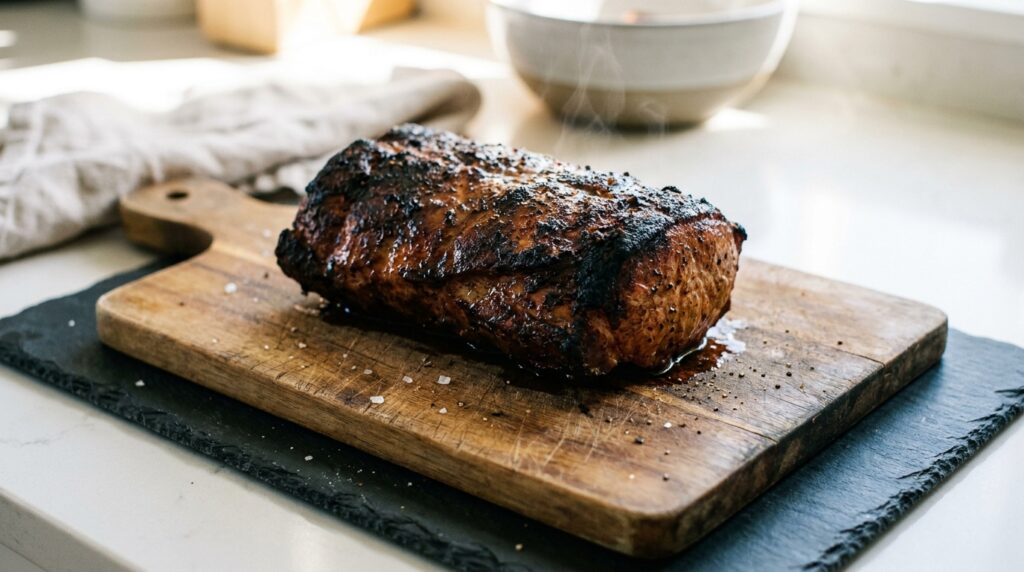
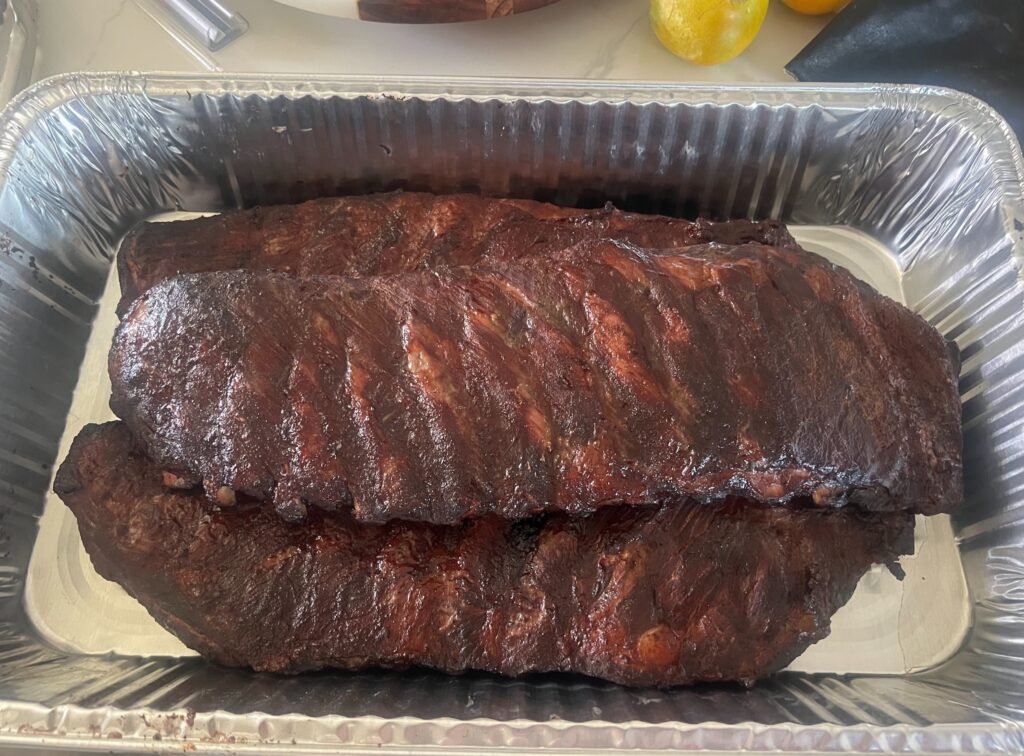
Planning, ingredients, preparation, and timing are the most critical elements to making and serving great food.
Having enough time is the most important part when it comes to slow and low!
Meat Smoking Calculator takes the thinking out of the process.
It makes cooking and serving amazing tasting smoked meats every time, on time.
SOME OF OUR FAVORITE SITES
Smoking a Turkey for Thanksgiving!
BBQ Brethren
Smoking Meat Forums
Deejay’s Smoke Pit
USDA’s Food Safety Guidelines
Smoking Pit
Virtual Weber Bullet
Smoking Times and Temps
* To help support this free site, posts contain affiliate links. If you use one of the affiliate links, we may earn a commission at no additional cost to you. As an Amazon Associate I earn from qualifying purchases.