On Time, Every Time.
BBQ Catering Contracts & Deposits: What to Put in Writing
A catering contract is not about distrust – it is about making the fuzzy parts of a party precise while everyone is still friendly. Every clause below exists because some caterer somewhere ate a loss learning it. (This is practical field guidance, not legal advice – have a professional look over your final template.)
The deposit structure that protects your calendar
The industry standard is simple and fair: 50% to book the date, balance due on or before event day. The deposit is not a formality – when you book a Saturday you are refusing every other job that day, and the deposit is what makes that refusal survivable if plans change. For large events some caterers run thirds (book / T-minus 14 / day-of). Whatever you choose, the quote should compute the dollar figures – our calculator’s client documents carry the deposit line automatically.
The clauses that matter
- Final headcount deadline – “guaranteed guest count due 7 days before the event” – plus the price per added guest after the deadline. Headcount drift is the number one source of catering disputes; this clause converts it to arithmetic.
- Prices valid until [date]. Meat markets move – brisket can jump 20% between a January inquiry and a June wedding. A 14-day validity window (30 at most) means an old quote is a conversation, not a loss. Every quote from the calculator carries this date.
- Cancellation tiers. Common: deposit non-refundable within 30 days of the event, 50% of the total within 14 days, full amount within 72 hours (you have bought the meat by then). Gentler variant: transferable to a new date within 12 months.
- The service window. “Service from 5:30 to 7:30 PM; additional service time $X per staff-hour.” Without this, a two-hour buffet quietly becomes five.
- What is and is not included. Meats, sides, serviceware, setup and teardown – and explicitly whether rentals (tables, linens), alcohol service, and cake cutting are yours.
- Site requirements. Level access for the rig, a power outlet if needed, fire clearance for on-site smoke – and who obtains any venue or event permit.
- Weather and force majeure. Outdoor event, no tent, 40% rain? Say now what happens: reschedule terms, indoor fallback, or client accepts the risk.
- Leftovers. Health-code reality: many caterers release leftovers to the client with a signed acknowledgment that safe handling transfers with them – or retain them outright. Decide and write it.
Getting paid without awkwardness
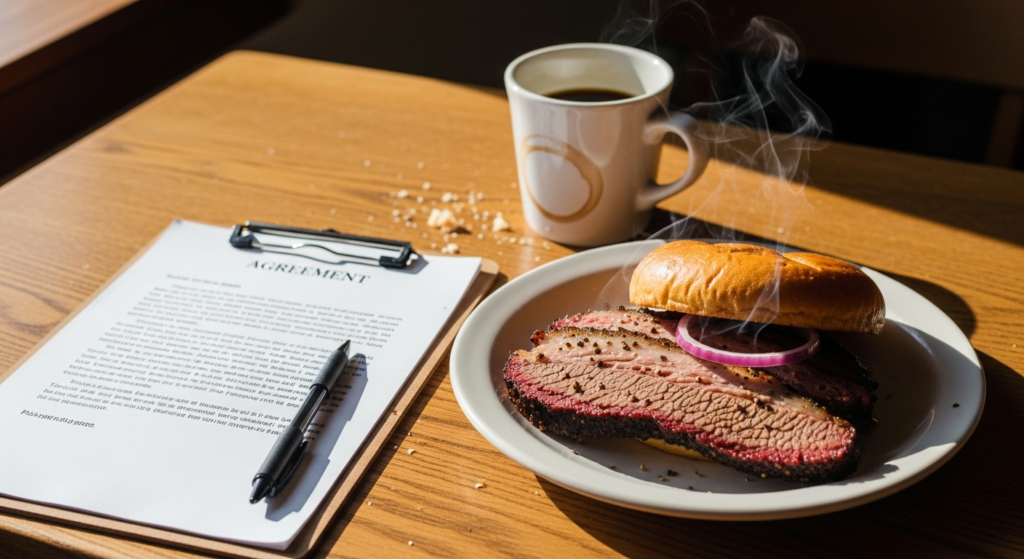
Send the agreement WITH the quote – professionals expect it, and it signals you have done this before. Collect the deposit through a trackable channel and tie the balance to a day-of invoice. (Pro users of the calculator can generate the quote, agreement numbers, and a payable invoice with the deposit-then-balance flow built in.)
Keep it one page
A one-page agreement gets signed the same day; a ten-page contract gets “we’ll look it over.” Cover the clauses above in plain language, put the numbers in a clean table, and save the lawyer-grade template for when your event sizes justify it. If you would rather start from finished wording, the seven fill-in-the-blank contract clauses cover the six numbers every agreement needs.
Frequently asked questions
How much deposit should a caterer require?
The industry standard is 50% to book the date with the balance due on or before event day. The deposit compensates for turning away other work on that date; larger events sometimes split into thirds.
What should a BBQ catering contract include?
The essentials: guaranteed headcount deadline (typically 7 days out) with a per-added-guest price, a prices-valid-until date, tiered cancellation terms, the service window with an overtime rate, what is included, site requirements, weather terms, and a leftovers policy.
Why do catering quotes expire?
Because ingredient markets move - brisket prices can swing 20% in a season. A 14 to 30 day validity window protects the caterer from honoring January prices at a June event, and every professional quote carries the date.
What is a fair catering cancellation policy?
A common tiered structure: the deposit becomes non-refundable 30 days out, 50% of the total is due within 14 days, and the full amount within 72 hours of the event - by which point the meat is bought. Offering a one-time date transfer softens it without eating the loss.
Watch: from caterers who do this
 ▶ How to Cater Large Food Events: Lessons from Dski Grillzby Dski Grillz
Written by John Kirker, who built the first meat smoking calculator in 2011. Times come from cooks we have actually run and logged; temperature and feel decide the finish, never the clock alone.
Reviewed by John Kirker, Founder, John Kirker Inc. - last updated August 9, 2026.

Rated 5by 500+ users
Tagline
Other Options
The MeatSmokingCalculator will help you plan the timeline for any meal.



Planning, ingredients, preparation, and timing are the most critical elements to making and serving great food.
Having enough time is the most important part when it comes to slow and low!
Meat Smoking Calculator takes the thinking out of the process.
It makes cooking and serving amazing tasting smoked meats every time, on time.
SOME OF OUR FAVORITE SITES
Smoking a Turkey for Thanksgiving!
BBQ Brethren
Smoking Meat Forums
Deejay’s Smoke Pit
USDA’s Food Safety Guidelines
Smoking Pit
Virtual Weber Bullet
Smoking Times and Temps
* To help support this free site, posts contain affiliate links. If you use one of the affiliate links, we may earn a commission at no additional cost to you. As an Amazon Associate I earn from qualifying purchases.