On Time, Every Time.
Brisket on a Traeger: Times, Temps and the Overnight Plan
Brisket on a Traeger runs at 225°F for roughly 75 minutes per pound, wrapped when the bark is set and the stall arrives around 165-170°F, and pulled probe-tender near 203°F. A 12 lb packer is a 12 to 16 hour cook plus a rest of at least an hour. A pellet grill will not fight you on temperature – the whole game is bark, the stall, and the rest.
What a pellet grill changes about brisket
Two things, one good and one you have to manage.
The good: temperature stability. An overnight brisket on a stick burner means getting up every 45 minutes. A Traeger holds 225°F while you sleep. For a cook this long, that is transformative.
The thing to manage: smoke volume. Pellet grills produce their heaviest smoke at low temperatures and taper off as they climb. Brisket takes most of its smoke in the first 4 to 6 hours, which luckily is the low-and-slow part, but if you want a heavier smoke ring and deeper flavor you have options – run Super Smoke early, start at 180°F for the first hour or two, or add a smoke tube.
Trimming
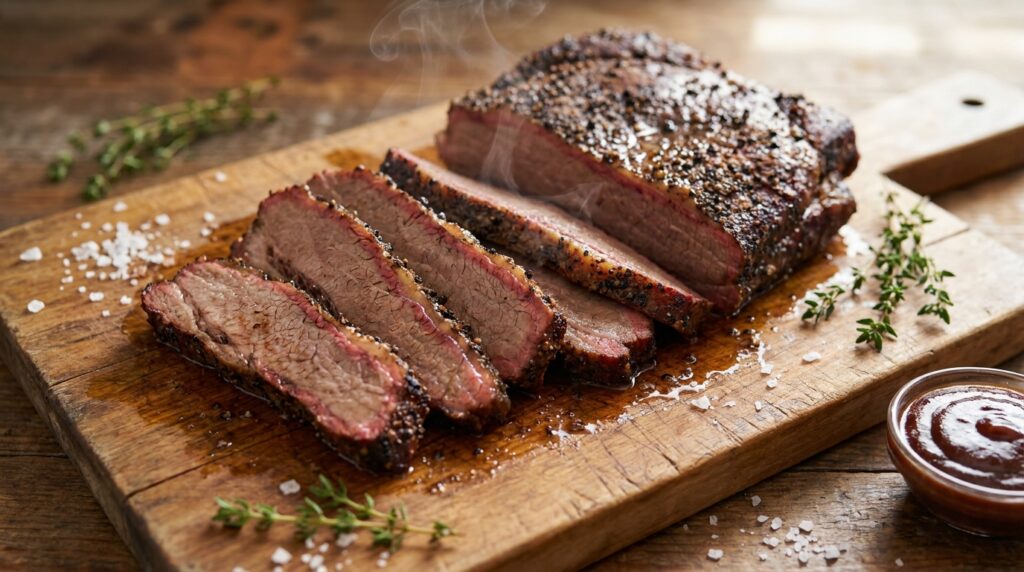
Trim the fat cap to about a quarter inch. Take off the hard, waxy fat that will never render, round the edges so nothing thin burns, and remove the big deckle fat between the point and flat if you want more even cooking. A well-trimmed brisket cooks more evenly and gives smoke a better surface.
Season with coarse salt and coarse black pepper, roughly 50/50. Brisket does not need a complicated rub – it needs enough coarse seasoning to build a crust, which is why a layered commercial rub versus plain salt and pepper changes less about the cook than the schedule does. Even the Meat Church brisket method comes down to the same timings once you strip away the Holy Cow layer. Let it sit until the rub turns wet-looking before it goes on.
Fat cap up or down on a pellet grill?
On a pellet grill, fat cap down is usually the better call. The heat source and deflector plate are beneath the grate, so the fat cap acts as a shield for the flat, which is the part most likely to dry out. On an offset with heat coming from the side, this argument matters less. If your particular grill runs hot on one side, rotate the brisket every few hours.
The cook
- 225°F, unwrapped. Super Smoke on if you have it. Expect 6 to 8 hours to reach the stall on a full packer.
- Ride out or beat the stall. Around 150-170°F, evaporative cooling parks the internal temperature – sometimes for hours. This is normal, not a problem with your grill.
- Wrap when the bark is set. Test it: if the bark does not smear when you press it, it is ready. Butcher paper breathes and preserves bark; foil is faster but softens it. Wrap tightly.
- Push to about 203°F. You can raise the grill to 250°F after wrapping. Start probing at 195°F.
- Rest, seriously. One hour minimum, and 2 to 4 hours in a dry cooler is better. A brisket sliced straight off the grill bleeds out. The calculator schedules a proper rest and can hold it to your serving time.
Pellet consumption and the overnight cook
Plan on roughly 1 to 2 lb of pellets per hour at 225°F, more in cold or windy weather. A 14 hour brisket can burn through 20 lb. Fill the hopper before bed, and if it is winter consider an insulation blanket. Running out of pellets at 3am is the single most common way a Traeger brisket goes wrong.
Use a leave-in probe in the thickest part of the flat, not the point. Most pellet grills have probe ports; a separate wireless thermometer is still worth having because it will alarm.
Best pellets for brisket
Oak is the classic Central Texas answer and the most reliable. Hickory is stronger and very good. Mesquite is authentic to parts of Texas but assertive over a 14 hour cook – many people blend it. Post oak blends and competition blends are made for exactly this. Avoid pure fruit woods here; they are lovely but too polite for a packer.
Frequently asked questions
How long does a brisket take on a Traeger at 225?
Roughly 75 minutes per pound, so 12 to 16 hours for a 12 lb packer, plus at least an hour of rest. Treat it as a planning number only – briskets finish when they probe tender, not when the math says so.
Should I use Super Smoke the whole time?
You cannot – Super Smoke generally caps around 225°F. Use it during the unwrapped phase, which is when the meat actually takes on smoke. After wrapping, smoke no longer penetrates, so it makes no difference.
Why is there no smoke ring on my pellet grill brisket?
Pellet grills burn cleanly and produce less of the nitrogen dioxide that creates a smoke ring. It is a cosmetic issue and does not affect flavor. A smoke tube, starting cold, or a lower initial temperature all help if the ring matters to you.
Do I have to wrap?
No, but an unwrapped brisket takes considerably longer and risks a dry flat. Butcher paper is the usual compromise: it beats the stall while keeping most of the bark.
What if it finishes early?
Good – that is why you build in a buffer. A wrapped brisket holds safely in a dry cooler for several hours and many pitmasters think a long hold improves it. The calculator has a hold mode that plans for this.
Plan the whole cook
Put in your packer weight and your dinner time above and the calculator works backward through the trim, the rub, the smoke, the wrap, the finish and the rest. For more depth see the brisket smoking guide, the burnt ends hub, and the full times and temperatures chart.
Written by John Kirker, who built the first meat smoking calculator in 2011. Times come from cooks we have actually run and logged; temperature and feel decide the finish, never the clock alone.
Reviewed by John Kirker, Founder, John Kirker Inc. - last updated September 9, 2026.

Rated 5by 500+ users
Tagline
Other Options
The MeatSmokingCalculator will help you plan the timeline for any meal.
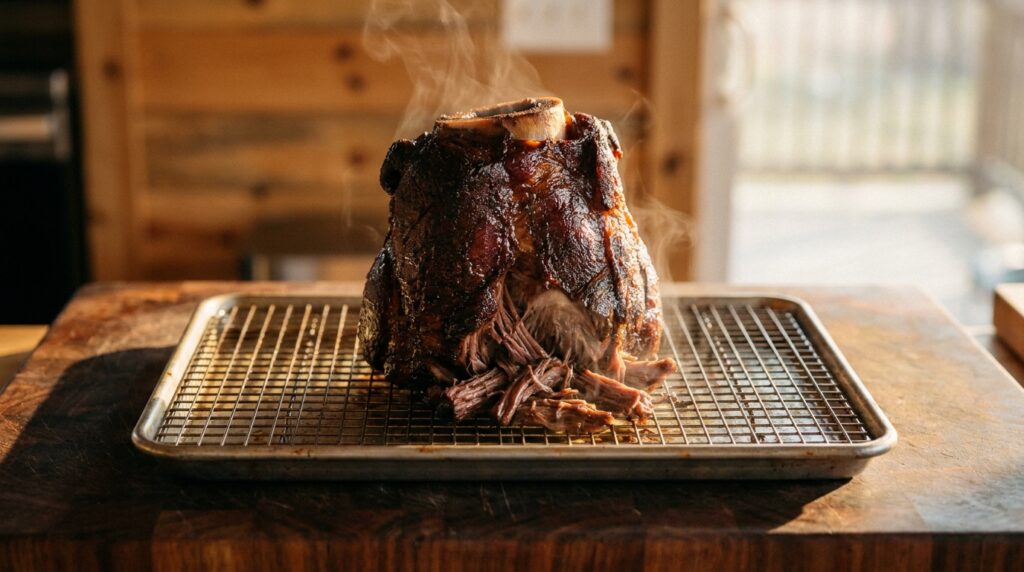
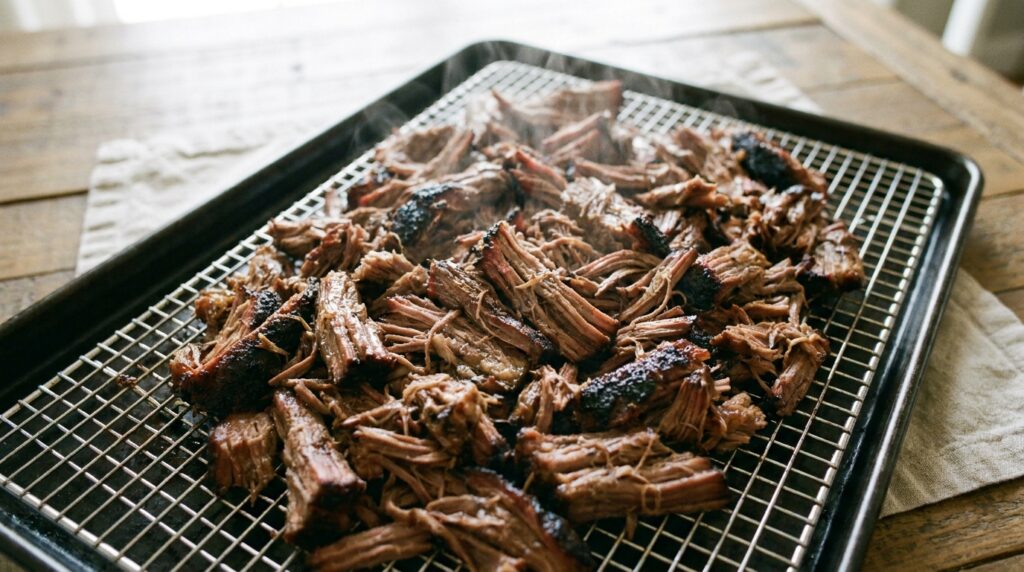
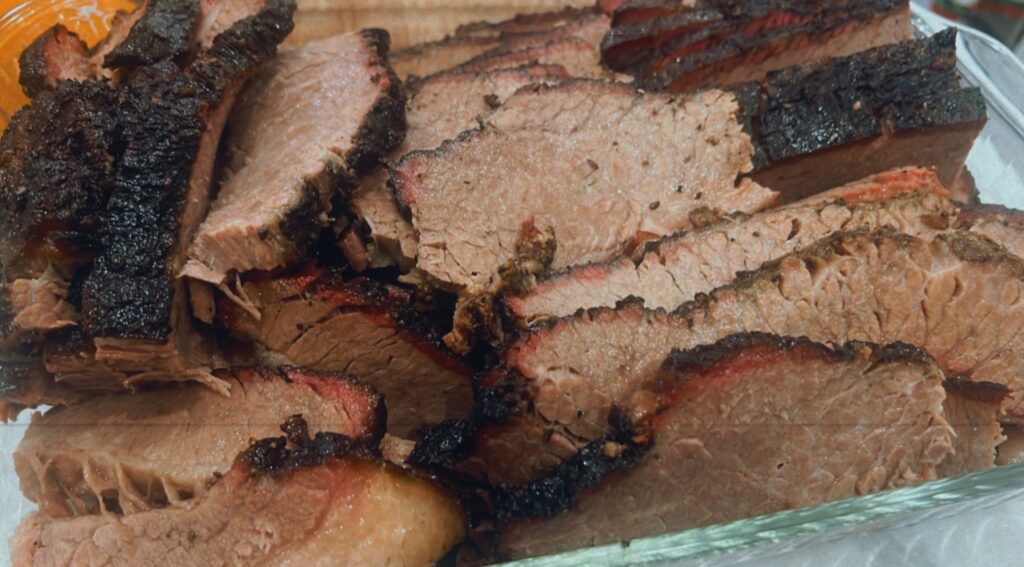
Planning, ingredients, preparation, and timing are the most critical elements to making and serving great food.
Having enough time is the most important part when it comes to slow and low!
Meat Smoking Calculator takes the thinking out of the process.
It makes cooking and serving amazing tasting smoked meats every time, on time.
SOME OF OUR FAVORITE SITES
Smoking a Turkey for Thanksgiving!
BBQ Brethren
Smoking Meat Forums
Deejay’s Smoke Pit
USDA’s Food Safety Guidelines
Smoking Pit
Virtual Weber Bullet
Smoking Times and Temps
* To help support this free site, posts contain affiliate links. If you use one of the affiliate links, we may earn a commission at no additional cost to you. As an Amazon Associate I earn from qualifying purchases.