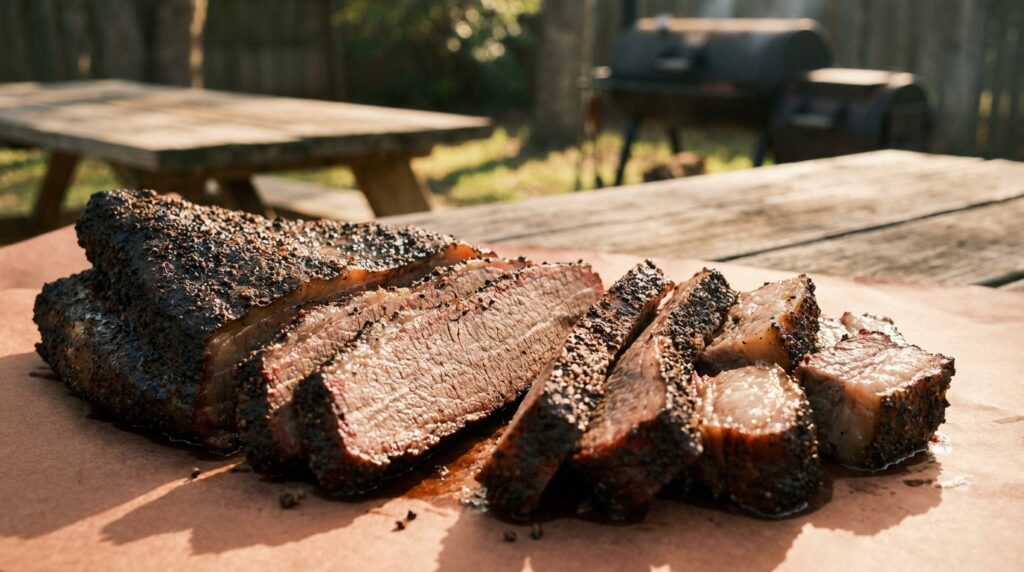
On Time, Every Time.
Meat Church Brisket Rub vs Salt and Pepper: What Actually Changes the Cook
If you want Meat Church brisket flavor without gambling a 14 hour cook and a $90 packer, the honest answer is that the seasoning is the cheap part and the schedule is the expensive part. Matt Pittman’s method is a layered rub – Meat Church Holy Cow over a base of Holy Gospel or SPG – then 225F over oak, wrap when the bark stops smearing, probe tender near 203F, and rest an hour minimum. The rub you can substitute for pennies. The trim, wrap timing and pull temp you cannot.
- Rub substitute: roughly 50/50 coarse kosher salt and 16-mesh black pepper
- Pit temp: 225F over oak or post oak
- Planning number: about 75 minutes per pound sliced, 82 minutes per pound pulled
- Wrap trigger: bark does not smear when pressed, usually 165-180F internal
- Finish: probe tender, generally near 203F; start probing at 195F
- Rest: 1 hour minimum, 2 to 4 hours in a dry cooler is better
The situation you are actually in
You have watched the videos. You know the brisket costs more than the rest of the groceries, you know people are coming at 6 p.m., and you have a quiet fear of pulling a dry, grey flat out of butcher paper in front of them. That fear is the real reason you are searching for a rub. A rub feels like something you can buy.
Here is the position this page holds: you can copy every Meat Church seasoning choice exactly and still ruin the brisket, and you can skip all of them and still nail it. The cost of getting brisket right is measured in trim, timing and patience, not in shaker bottles.
What Pittman actually uses, and the layering order
Matt Pittman’s Meat Church approach to beef is a two-layer season. A base layer first, then the beef-forward top coat, applied in multiple passes so the bottom, top, sides and edges all get covered. The common pairing is Holy Gospel or a plain SPG base underneath, with Holy Cow, his coarse salt-and-pepper beef rub, over the top, and the full Meat Church brisket schedule shows how that seasoning fits around the wrap and pull decisions.
The base layer is doing salt and a little sweetness. The top layer is doing bark and pepper bite. That order matters more than the brand does, because the coarse pepper needs to sit on the outside where it can build crust rather than get buried.
The SPG substitute, in exact ratios
If you do not want to order rub, mix roughly equal parts coarse kosher salt and coarse 16-mesh black pepper. That 50/50 blend is the classic Texas-style rub and it is what the pit temples in Central Texas run. Add granulated garlic to taste if you want the third leg of SPG, but understand you are adding flavor, not function.
What I keep from his method and what I reject
- Keep: two-layer seasoning in multiple passes, edges included. More surface coverage means more bark.
- Keep: cooking by feel, not clock. Pittman’s best habit is proving the method transfers to smaller cuts.
- Keep: coarse grind. 16-mesh pepper survives 8 hours of smoke. Fine pepper turns bitter and pasty.
- Reject: treating any rub as the variable that decides the cook. It is not, and the FAQ below explains why.
- Reject: binder as a flavor step. Mustard or hot sauce is optional and adds nothing you will taste.
Trim like it matters, because it does
Trim the night before if you can. Slice the fat cap down to about a quarter inch, remove the hard fat that will never render on both the point and the flat, square up the flat’s corners so they do not dry out, and peel the silver skin off the underside of the flat. A tidy brisket cooks and slices more evenly.
Save every scrap of hard fat. Render it slowly in a slow cooker over several hours, stirring occasionally, then strain it. That liquid tallow goes into the wrap later. It is the cheapest upgrade in brisket cooking, and you already paid for the fat.
After seasoning, let the brisket sit at least 30 minutes, or overnight in the fridge, before it hits smoke. That rest is what gets the salt into the meat instead of leaving it on the surface.
Start times for a 6 p.m. dinner
This is where most first briskets fall apart. Not the rub. The math. At 225F, figure roughly 75 minutes per pound for sliced brisket, then add rest on top. Below are backward-planned start times using that number plus a two hour rest, which is the middle of the 1 hour minimum and the 4-plus hours a towel-wrapped cooler will hold.
| Packer weight | Est. cook time | Rest | Start smoking | Notes |
|---|---|---|---|---|
| 10 lb | About 12.5 hrs | 2 hrs | About 3:30 a.m. | Trim and season the night before |
| 12 lb | About 15 hrs | 2 hrs | About 1:00 a.m. | Overnight cook, set an alarm for the stall |
| 15 lb | About 18.75 hrs | 2 hrs | About 9:15 p.m. the night before | Plan a longer rest as your buffer |
Those are schedules, not promises. If it finishes early, the cooler absorbs the difference. That is why the rest is your buffer and not a formality. The brisket smoking calculator runs the same math backward from any serving time, including the hold.
Smoke at 225F and stop watching the clock
Run the pit at 225F over oak. Fat side up or down is a smaller argument than the internet suggests: point it at your heat source. On a pellet grill that usually means fat side down to shield the meat from the deflector plate’s radiant heat, keeping the pit at or below 225F. On an electric smoker, crack the door every couple of hours to vent excess steam.
The stall is not a malfunction
Somewhere between 145F and 165F internal, the temperature parks itself, sometimes for hours. That is evaporative cooling, not a dead thermometer. On a full packer, expect 6 to 8 hours just to reach the stall. Spritz the exposed edges every few hours if they look dry, then leave it alone.
Two cook logs: one that worked, one that did not
Numbers in a chart are theory. Here are two real ones.
Cook log: “Big Tex,” 13.2 lb packer
- On the pit at 11:40 p.m., seasoned the night before, SPG base with coarse pepper on top
- Pit held 225F over post oak, fat side up on an offset
- Stall hit at 152F around 6:15 a.m. and sat there until roughly 9:30 a.m.
- Bark passed the press test at 8:50 a.m., internal 171F. Wrapped in butcher paper with rendered tallow at 9:05 a.m.
- Pit raised to 250F after the wrap. Started probing at 195F, probed like warm butter at 201F at 12:40 p.m.
- Rested wrapped in towels in a dry cooler for just over 3 hours
- Sliced pencil-thick against the grain at 4 p.m. Flat held a bend without cracking, point cubed clean for burnt ends
Cook log: the 11 lb flat-heavy packer that went wrong
- On at 2 a.m., same 225F, same wood, wrapped at 4 hours in because the schedule said so, not because the bark was set
- Bark smeared under thumb pressure at wrap time. That was the tell I ignored
- Hit 203F fast, about 90 minutes earlier than expected, because foil braised it
- Rested 40 minutes because guests were early. Board flooded with juice on the first slice
- Result: soft, pot-roasty crust and a flat that shredded instead of slicing
Two changes fixed it on the next cook: wrap only after the press test passes, and treat the rest as non-negotiable by starting earlier. Both mistakes were schedule mistakes. Neither was a seasoning mistake.
Wrap by feel: the press test
Press the bark with a finger. If it does not smear or rub off, it is set. That usually lands between 165F and 180F internal, often right when surface moisture stops pooling, a sign the brisket has pushed through the stall.
Wrap tightly with some reserved tallow inside. Butcher paper breathes and preserves the bark you spent 8 hours building. Foil braises faster but softens the crust. After wrapping you can raise the pit to 250F, and that final stretch typically runs about two more hours.
Pull temp: probe tender beats any number
Start probing at 195F and expect to finish near 203F. You are feeling for warm butter, the probe sliding into the thickest part of the flat with no resistance. Roughly 190F reads done for sliced and 200F or above for pulled, but tenderness decides, not the number.
A reliable instant-read thermometer is the whole game here. If you buy one piece of brisket gear, buy that. The full brisket method walkthrough lays out the same decision points in recipe order.
I have cooked briskets that probed tender at 197F and briskets that fought me until 207F. Same pit, same weight, same rub. Once you accept that, the display stops being a target and becomes a hint.
Rest, or waste the whole cook
One hour minimum. Two to four hours in a dry cooler is better, and wrapped in towels a brisket holds 4-plus hours and genuinely improves. A brisket sliced straight off the smoker bleeds onto the board, and that liquid was supposed to be in the meat.
There is a longer variation worth knowing: pull at about 195F, a few degrees under on purpose, then hold it wrapped at a steady 150F for up to 18 hours in a holding oven, sous vide bath or low oven. The remaining collagen keeps rendering into gelatin during that gentle hold, which is where the extra tenderness comes from.
The cheapest way to learn this method
Pittman’s most useful idea for home cooks is not a brisket at all. He gives a tri-tip the full brisket-style treatment, proving you can get big, tender brisket flavor from a much smaller and more affordable cut. If your first packer feels like a gamble you cannot afford, run the whole method on a tri-tip smoked like a brisket first. Just remember the ending changes: you take a brisket-style tri-tip to about 203F and probe tender, not the 130 to 135F you would pull for medium-rare slices. You learn the press test and the probe feel on a short cook instead of a fourteen hour one, for a fraction of the meat cost.
Slicing: two muscles, two grains
- Separate the flat from the point, their grains run in different directions
- Slice the flat about pencil-thick, against the grain
- Turn the point, then slice or cube it for burnt ends
- Trim remaining hard fat as you carve, not before
Wood: pick the backbone, then season it
Oak and post oak are the Central Texas answer and the most reliable. Hickory is stronger and very good on beef. Pecan rounds things out. Mesquite is authentic to parts of Texas but assertive over a 14 hour cook, so many people blend it. Avoid pure fruit woods on a packer, they are lovely and far too polite for this much beef.
Get the trim, the press test and the rest right, and the shaker bottle becomes what it always was: a preference. That is the difference between hoping your brisket works and knowing why it did.
FAQ
What rub does Meat Church use on brisket?
The beef-forward top coat is Holy Cow, a coarse salt-and-pepper style rub, typically layered over a base of Holy Gospel or a plain SPG. Base layer first, beef rub on top, applied in multiple passes covering top, bottom, sides and edges.
What can I use instead of Meat Church brisket rub?
Roughly equal parts coarse kosher salt and 16-mesh coarse black pepper. That 50/50 blend is the classic Texas-style rub and it builds excellent bark. Add granulated garlic if you want an SPG profile. The commercial rub is a flavor preference, not a requirement.
What temperature does Meat Church cook brisket at?
The method here runs 225F over oak, unwrapped, until the bark sets, then up to about 250F after the wrap. Some cooks run hotter, in the 250F to 300F range, and still get excellent results as long as the wrap and pull decisions are made by feel.
How long does a 12 pound brisket take?
At 225F, plan roughly 75 minutes per pound for sliced brisket, so about 15 hours for a 12 pounder, plus rest. That includes 6 to 8 hours just to reach the stall. Start around 1 a.m. for a 6 p.m. dinner with a two hour rest.
What temp is brisket done?
When it probes like warm butter, usually near 190F sliced and 200F or above pulled. Start probing at 195F and expect most briskets to land around 203F. Tenderness decides, not the number.
Should I wrap brisket in foil or butcher paper?
Unlined butcher paper if you care about bark. It breathes and keeps the crust intact. Foil braises faster and gets you to temp sooner, but it softens the bark you worked all day to build. Either way, wrap tightly and add some rendered tallow.
Can I use this method on a pellet grill?
Yes. Keep the pit at or below 225F and place the brisket fat side down to shield the meat from the deflector plate’s radiant heat. Turn on Super Smoke if your grill has it. The Traeger brisket guide covers the overnight plan in detail.
How long should brisket rest?
An hour minimum. Two to four hours in a dry cooler is better, and wrapped in towels a brisket will hold 4-plus hours and improve while it waits. Slicing straight off the smoker costs you juice you cannot get back.
Written by John Kirker, who built the first meat smoking calculator in 2011. Times come from cooks we have actually run and logged; temperature and feel decide the finish, never the clock alone.
Reviewed by John Kirker, Founder, John Kirker Inc. - last updated October 5, 2026.
Sources for this article
- Packer brisket 10-15 lb, best quality you can afford (Steve Gow / EASY smoked brisket recipe)
- Trim fat cap to about a quarter inch, remove hard fat on point and flat, square flat corners, peel silver skin (EASY smoked brisket recipe)
- Render hard fat trimmings in a slow cooker over several hours, strain, reserve tallow for the wrap (EASY smoked brisket recipe)
- Roughly 50/50 coarse kosher salt and 16-mesh black pepper as classic Texas-style rub; multiple passes on top, bottom, sides, edges; rest 30 min or overnight (EASY smoked brisket re
- Mustard or hot sauce as optional binder (Long Hot Hold; Brisket Recipe for the Smoker)
- Smoke at 225F over oak/post oak (Brisket Recipe for the Smoker; Long Hot Hold; Traeger)
- Roughly 75 minutes per pound sliced, about 82 minutes per pound pulled (Brisket Recipe for the Smoker) - used for the 10/12/15 lb backward-planning table
- Stall between 145-165F, evaporative cooling; 6 to 8 hours to reach the stall on a full packer (Brisket Recipe for the Smoker; Traeger)
Facts drawn from this site's own documented knowledge and first-hand experience.

Rated 5by 500+ users
Tagline
Other Options
The MeatSmokingCalculator will help you plan the timeline for any meal.
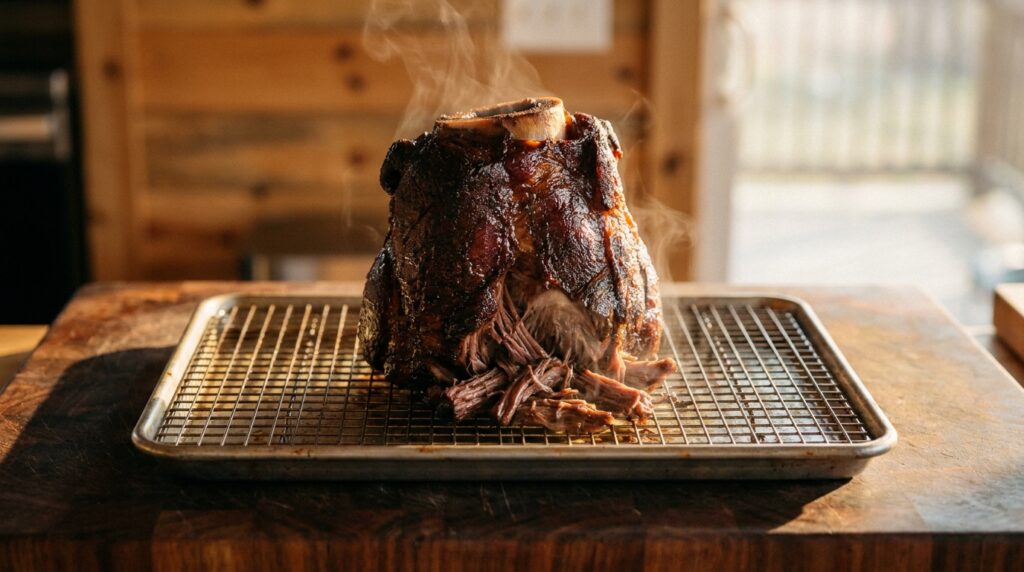
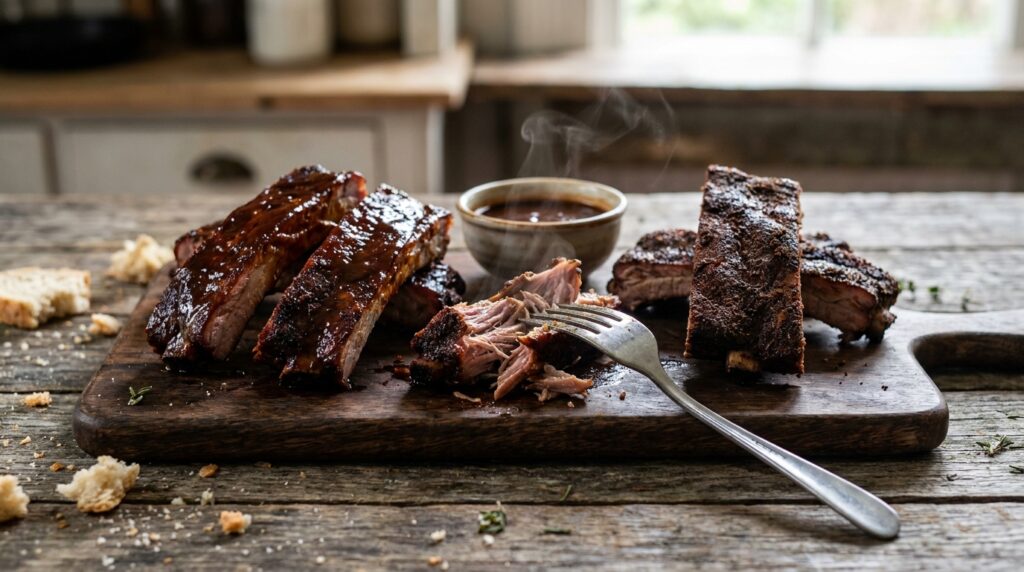
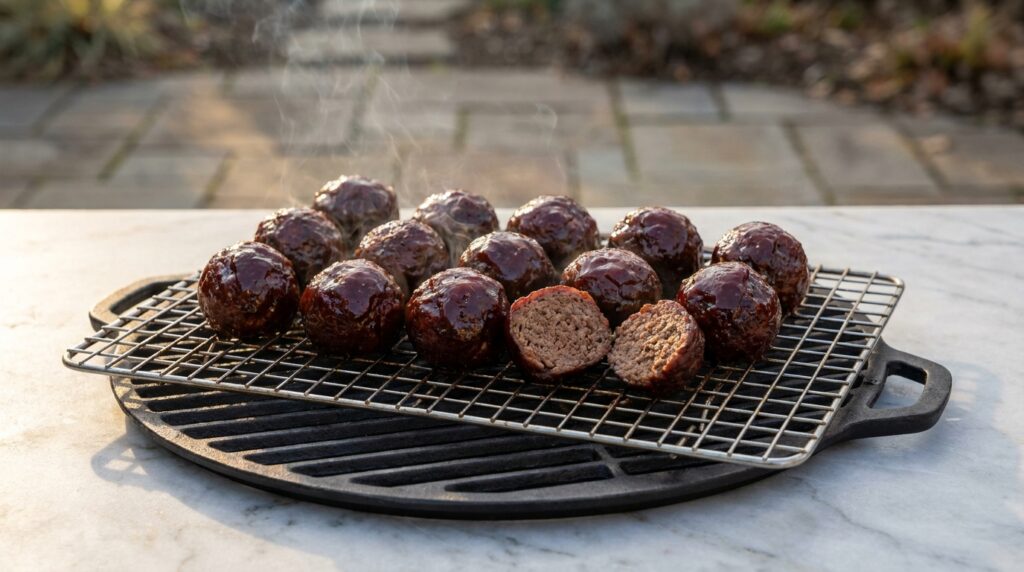
Planning, ingredients, preparation, and timing are the most critical elements to making and serving great food.
Having enough time is the most important part when it comes to slow and low!
Meat Smoking Calculator takes the thinking out of the process.
It makes cooking and serving amazing tasting smoked meats every time, on time.
SOME OF OUR FAVORITE SITES
Smoking a Turkey for Thanksgiving!
BBQ Brethren
Smoking Meat Forums
Deejay’s Smoke Pit
USDA’s Food Safety Guidelines
Smoking Pit
Virtual Weber Bullet
Smoking Times and Temps
* To help support this free site, posts contain affiliate links. If you use one of the affiliate links, we may earn a commission at no additional cost to you. As an Amazon Associate I earn from qualifying purchases.