On Time, Every Time.
To Wrap or Not to Wrap: Paper vs Foil vs Naked
Foil is fastest and softens the bark. Butcher paper is the middle ground. No wrap gives the best bark and takes the longest. That is the whole decision, and it is a trade between speed and crust. There is no option that gives you both.
What wrapping actually does
Wrapping limits evaporation from the surface. Since evaporative cooling is what causes the stall, restricting it makes the internal temperature climb again. It also traps moisture against the meat, which is why wrapped barbecue is more forgiving and less crusty.
Everything else follows from how tightly a given material seals.
Foil
Seals completely. No moisture escapes, so the meat effectively braises in its own juices. It is the fastest way through the stall by a wide margin, often cutting an hour or more off a long cook.
The cost is bark. Steam softens the crust you spent hours building, and it goes from crisp to soft in about twenty minutes. Foil is also the least forgiving on timing: the braising effect tenderises fast, so overshooting is easy.
Use foil when: you are short on time, you are cooking ribs to be very tender, or bark is not the point.
Butcher paper
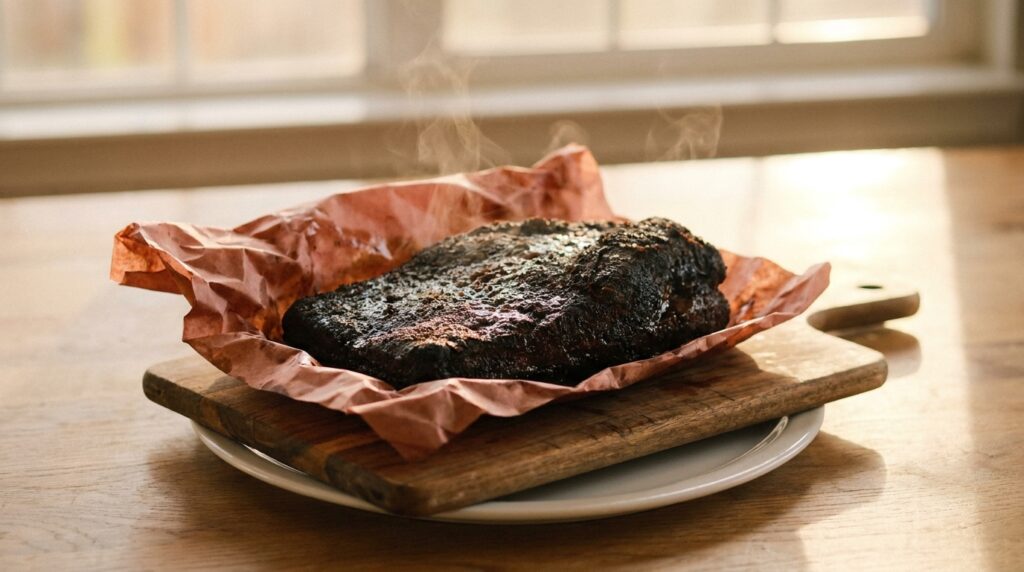
Breathes. Pink or peach paper slows evaporation without stopping it, so you get most of the stall-beating benefit while keeping most of the bark. This is what most competition brisket cooks use.
It is slower than foil and it is not a sealed environment, so you lose some juice into the paper. Use unwaxed, food-grade paper. Waxed paper and parchment are not substitutes.
Use paper when: you are cooking brisket, or anything where bark matters but you still need a predictable finish time.
No wrap
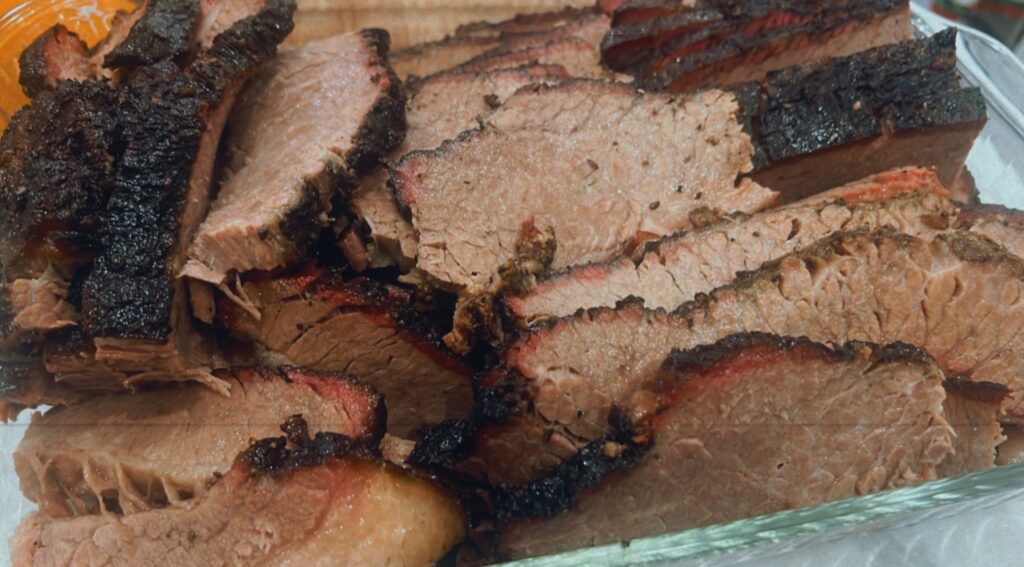
Best bark, longest cook, most variance. Everything that makes bark good – evaporation, smoke deposition, surface drying – keeps working the entire time.
The price is a stall of unpredictable length and a genuine risk of the surface drying too far on lean cuts. It works best on cuts with enough fat to protect themselves, like beef ribs and well-marbled pork butt.
Use no wrap when: you have time to spare, bark is the point, or you are cooking something fatty enough to take it.
When to wrap
Wrap when the bark is set, not at a number. Touch it: it should feel dry and firm, and it should not smear or come away on your finger. That usually lands somewhere around 160 to 165°F, right as the stall begins, but the meat tells you before the thermometer does.
Wrapping too early traps a soft surface and you never get bark at all. Wrapping too late means you have already spent the hours you were trying to save.
Quick reference
- Brisket: butcher paper. The classic compromise.
- Pork butt: any of the three. It is fatty and forgiving, so pick by how much time you have.
- Ribs: foil if you want them very tender, none if you want bite-through and bark.
- Beef ribs: no wrap. The bark is the whole point.
- Poultry: never. Wrapping guarantees soft skin.
Frequently asked questions
Is butcher paper better than foil for brisket?
For bark, yes. Paper breathes, so it beats the stall while keeping the crust mostly intact. Foil is faster but steams the bark soft.
At what temperature should I wrap a brisket?
When the bark is set rather than at a fixed number, which usually falls around 160 to 165°F. It should look dry and not smear when you touch it.
Can I use parchment or waxed paper instead?
No. Use unwaxed food-grade butcher paper. Waxed paper is not made for sustained heat and parchment does not behave the same way.
Does wrapping make meat more moist?
It does retain more moisture, especially with foil, which effectively braises the meat. What you trade away is bark, and with foil, a little of the smoke character too.
The calculator has a wrap control built in, so you can see exactly how each choice shifts your finish time. See also the smoking times and temperatures chart.
Written by John Kirker, who built the first meat smoking calculator in 2011. Times come from cooks we have actually run and logged; temperature and feel decide the finish, never the clock alone.
Reviewed by John Kirker, Founder, John Kirker Inc. - last updated August 12, 2026.

Rated 5by 500+ users
Tagline
Other Options
The MeatSmokingCalculator will help you plan the timeline for any meal.
Planning, ingredients, preparation, and timing are the most critical elements to making and serving great food.
Having enough time is the most important part when it comes to slow and low!
Meat Smoking Calculator takes the thinking out of the process.
It makes cooking and serving amazing tasting smoked meats every time, on time.
SOME OF OUR FAVORITE SITES
Smoking a Turkey for Thanksgiving!
BBQ Brethren
Smoking Meat Forums
Deejay’s Smoke Pit
USDA’s Food Safety Guidelines
Smoking Pit
Virtual Weber Bullet
Smoking Times and Temps
* To help support this free site, posts contain affiliate links. If you use one of the affiliate links, we may earn a commission at no additional cost to you. As an Amazon Associate I earn from qualifying purchases.