On Time, Every Time.
How to Tell When Smoked Meat Is Done Without a Thermometer
You can tell smoked meat is done without a thermometer by reading what the meat itself is telling you: how it feels when probed, how it moves, and how it pulls away from bone. A probe should glide in with almost no resistance, a blade bone should twist free, and ribs should bow and crack when lifted. These tells work because they’re measuring the actual thing you care about, collagen breakdown, not a proxy for it. That said, a thermometer is still the safest backup, and we’ll tell you honestly where “feel” alone isn’t enough.
Why texture beats temperature for the tough cuts
Here’s the belief worth correcting: a lot of folks think “done” is a single number you hit and stop. It isn’t. There are two separate questions hiding inside “is it done?” One is safety, has this reached a temperature that makes it safe to eat. The other is texture, has the connective tissue actually rendered enough to be good. For a steak those two answers sit close together. For a brisket they’re nearly 60°F apart, and that gap is exactly what confuses people who cook to a number and pull too early.
Tough cuts like brisket and pork butt need roughly 200 to 205°F for the collagen to render, and at that range temperature and texture basically converge, so feel becomes the more reliable read anyway. It helps to remember that collagen breaks down over time rather than at a magic number, which is why a long hold can finish the job even when the reading looks low. Probes and thermometers can lie to you depending on where they sit. A probe touching bone reads high, one sitting in a fat seam reads low, and that’s how a perfectly good cook ends up pulled 15 degrees off. Your hands and a probe’s resistance don’t have that problem.
The no-thermometer tells, cut by cut
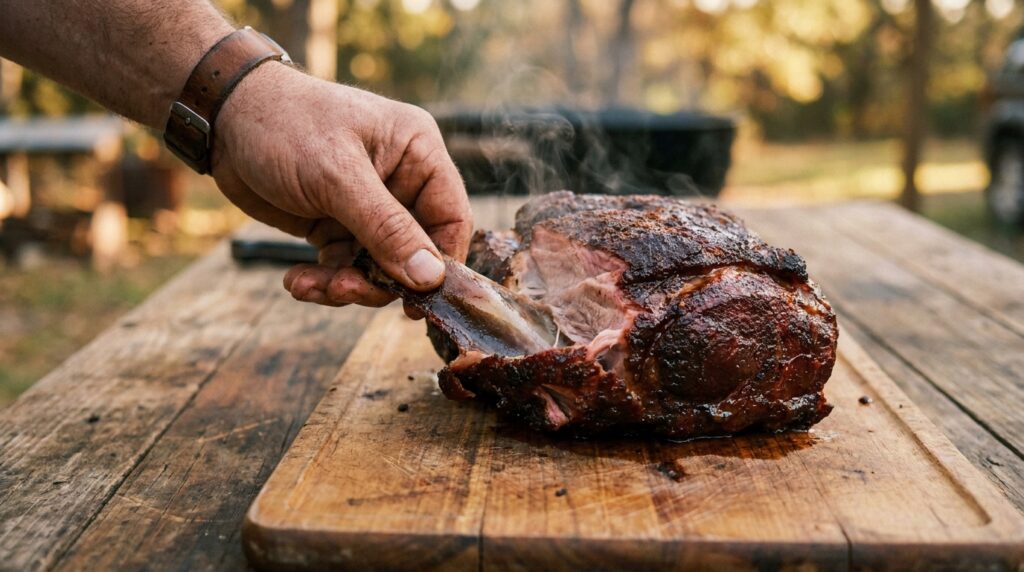
Pork butt: the blade bone twist
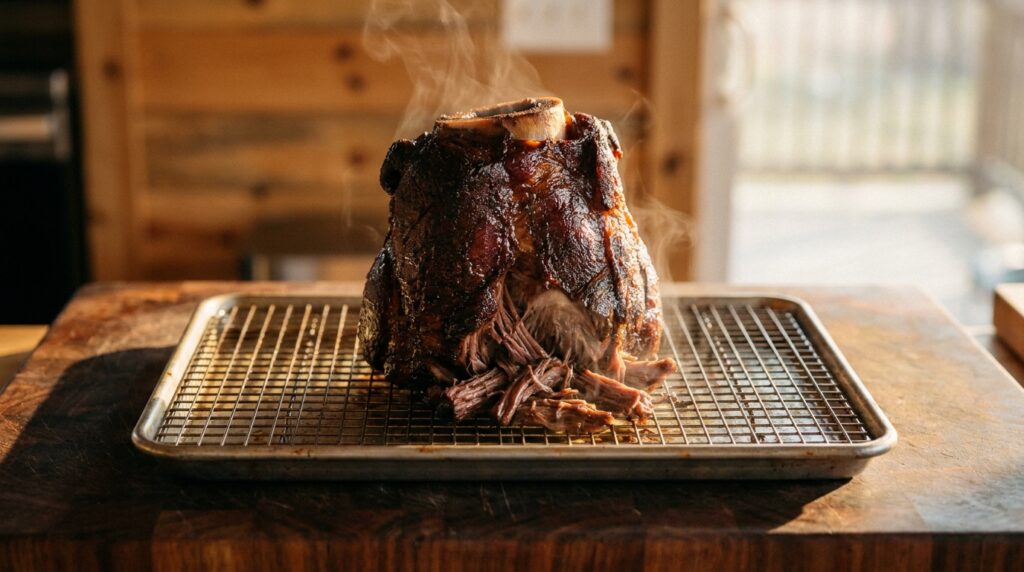
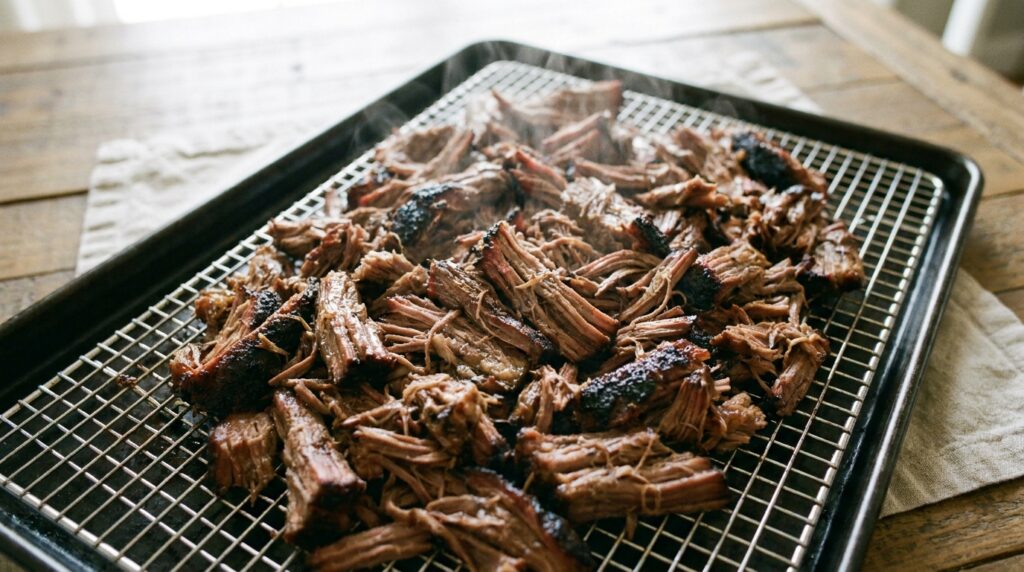
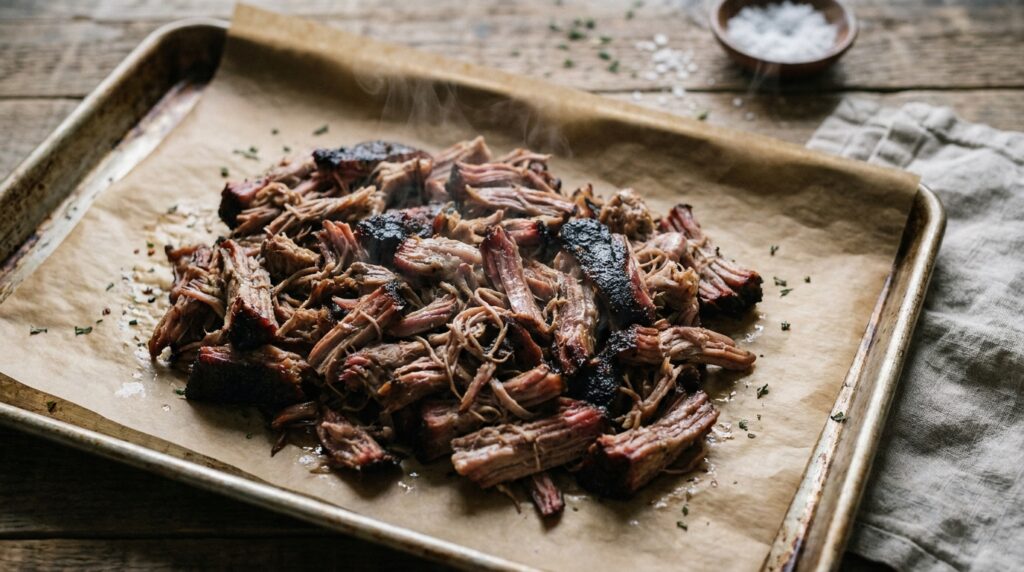
Grab the blade bone and twist. Done means it releases clean, and a probe glides through with no resistance anywhere in the meat. If you’re pulling, a fork should shred it with a twist. If you’re slicing instead, stop around 185°F while it still holds together, that one’s worth a thermometer glance since slicing needs a firmer structure than pulling.
Ribs: bend, pull-back, and toothpick
Ribs are thin, so probing between bones gives inconsistent numbers, temperature just isn’t a great tool here. Use these instead:
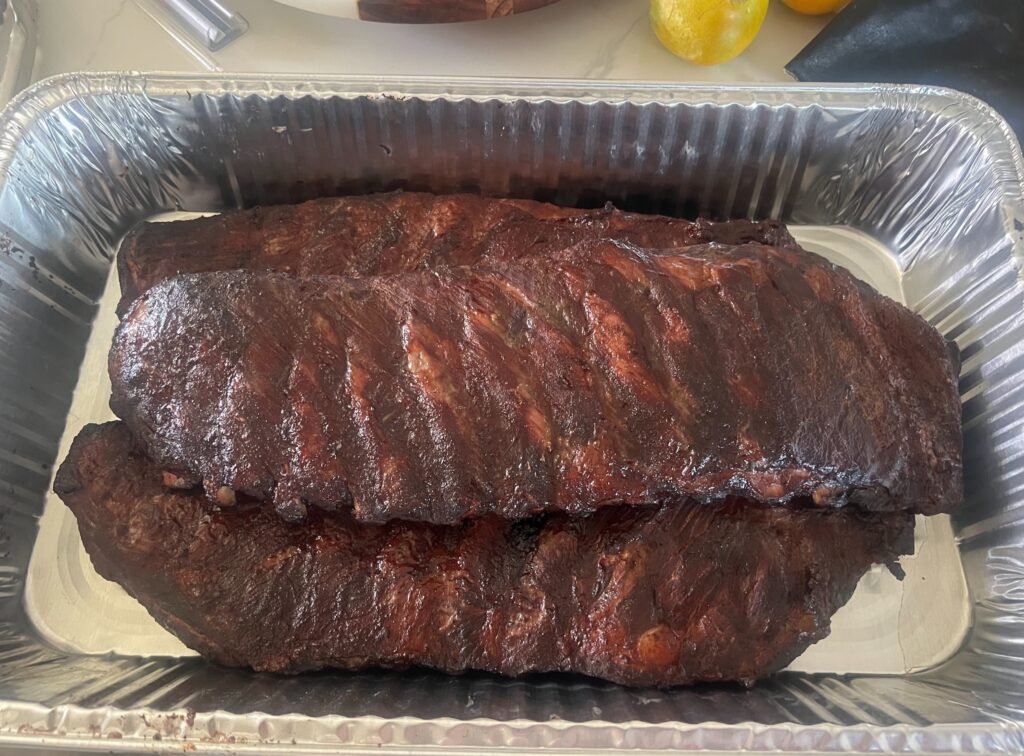
- The bend test. Pick the rack up with tongs about a third of the way down. It should bow deeply and the surface should crack. Stiff means more time. Threatens to break in half means you’ve gone past bite-through into fall-off-the-bone.
- Bone pull-back. The meat should have receded a quarter inch or so from the bone ends.
- Toothpick test. A probe or toothpick between bones should slide in with almost no resistance, like probing warm butter.
If you want a number anyway, most ribs land around 198-203°F, but competitors trust the bend test over the thermometer every time.
Pastrami: texture after the steam, not before
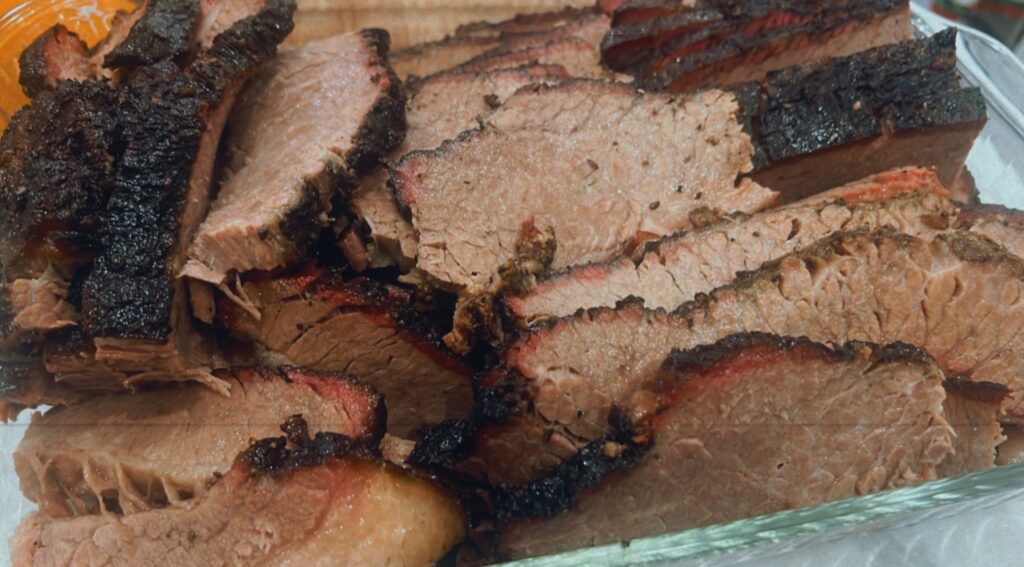
Pastrami’s a slightly different animal because the “smoke” stage and the “done” stage are separated by a steam finish. Smoke gives flavor, steam gives texture. You’re looking for it to hit roughly 200°F territory during that steam or braise, where the collagen melts and it slices like the deli counter. Short of a thermometer, look for the same collagen giveaway as brisket or butt, resistance disappears and the slice holds together instead of shredding apart.
Where feel alone isn’t enough, and why
Tender, lean cuts are the exception. Steaks, prime rib, tri-tip, picanha, venison and elk backstrap, pork loin and tenderloin, salmon, these are ruined by extra heat and there’s no bend test or bone twist that substitutes for a thermometer here. Pork tenderloin specifically should be pulled at 145°F internal with a 3-minute rest, per USDA guidance, a faint blush of pink at the center is normal and safe. Cooking it to the old 160°F standard is how tenderloin turns to sawdust. Ground meat is its own category too, ground beef must reach 160°F internal, per USDA, non-negotiable for food safety, and there’s no visual or feel test that verifies that reliably. For anything in this tender-cut or ground-meat category, use a thermometer.
Also account for carryover. Meat keeps cooking after it comes off, usually 5 to 10°F on a thick roast and less on something thin. Pull early enough to allow for it, especially on anything you want to serve pink.
Plan the cook, then trust the meat
Feel tests work best when you’re not guessing at total time too. Ballpark your cook window first so you’re checking bend, twist, and toothpick at the right moment instead of too early or too late.
FAQ
How do I know when brisket is done without a thermometer?
Probe it in several spots away from bone and fat seams. It should glide through with almost no resistance, similar to the blade bone twist test used for pork butt. Brisket needs the collagen rendered, generally in the 200 to 205°F range, so if the probe still meets resistance anywhere, it’s not there yet.
Can you tell ribs are done just by looking?
Mostly yes. Lift the rack a third of the way down with tongs, it should bow deeply and the surface should crack. Bone pull-back of about a quarter inch and a toothpick sliding easily between bones confirm it. Stiff ribs need more time.
Is it safe to skip the thermometer entirely?
For tough cuts like brisket, pork butt, and ribs, feel tests are reliable because they measure collagen breakdown directly. For lean, tender cuts like pork tenderloin, steak, or salmon, and for anything ground, use a thermometer, the safety and doneness numbers are too close together to eyeball.
Why does my probe give different readings in the same piece of meat?
Where you measure matters. A probe touching bone reads high and one sitting in a fat seam reads low, which is exactly how a good cook gets misjudged by 15 degrees. Check the thickest part, away from bone, in more than one spot.
What’s the biggest mistake people make judging doneness?
Treating one number as the answer to two different questions, safety and texture. For a brisket those numbers are nearly 60°F apart. Pulling at a “safe” temperature on a tough cut gets you chewy meat, not tender meat.
Written by John Kirker, who built the first meat smoking calculator in 2011. Times come from cooks we have actually run and logged; temperature and feel decide the finish, never the clock alone.
Reviewed by John Kirker, Founder, John Kirker Inc. - last updated September 11, 2026.

Rated 5by 500+ users
Tagline
Other Options
The MeatSmokingCalculator will help you plan the timeline for any meal.
Planning, ingredients, preparation, and timing are the most critical elements to making and serving great food.
Having enough time is the most important part when it comes to slow and low!
Meat Smoking Calculator takes the thinking out of the process.
It makes cooking and serving amazing tasting smoked meats every time, on time.
SOME OF OUR FAVORITE SITES
Smoking a Turkey for Thanksgiving!
BBQ Brethren
Smoking Meat Forums
Deejay’s Smoke Pit
USDA’s Food Safety Guidelines
Smoking Pit
Virtual Weber Bullet
Smoking Times and Temps
* To help support this free site, posts contain affiliate links. If you use one of the affiliate links, we may earn a commission at no additional cost to you. As an Amazon Associate I earn from qualifying purchases.